Unchecked operating costs and reimbursement pressures can quickly erode margins. Strengthening financial performance provides the controls and visibility needed to protect cash, prioritize spending, and sustain operations through market changes.

Systematic cost and revenue reviews expose hidden losses from charge capture gaps to denials enabling targeted fixes that immediately improve cash flow.

AI-driven AR insights and payer prioritization speed claim turnaround and reduce days-sales-outstanding, stabilizing working capital.

Tie budgets to operational KPIs so spend matches capacity and outcomes, reducing redundant tasks and freeing staff for higher-value work.

A concise set of tactics derived from industry patterns that consistently raise net collections and cut waste.

How AI and RCM data identify bottlenecks, prioritize appeals, and automate low-value tasks for faster results.

Practical techniques to accelerate adjudication and improve payer engagement and contract performance.

Operational changes, role clarity, and dashboards that make continuous improvement repeatable across teams.
Templates and checklists to implement the 10 methods immediately.
Faster net collections, lower AR days, and clearer cash-flow visibility.
Repeatable processes and dashboards that scale across sites and service lines.
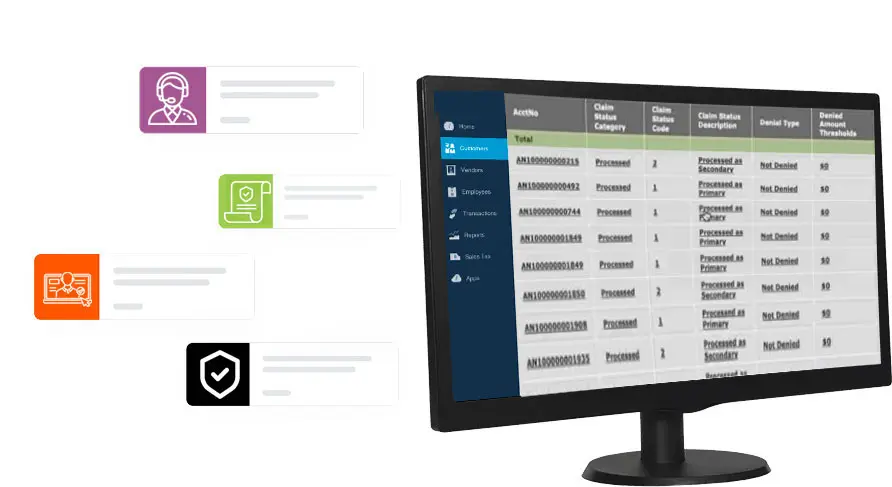
Rising costs and reimbursement pressures tighten margins. Prioritizing performance stabilizes cash, reduces surprises, and protects the organization’s ability to invest in care and growth.
They’re targeted tactics (cost controls, denial workflows, AR prioritization, charge capture, payer strategy, analytics, automation, etc.) distilled from client patterns and RCM data that repeatedly boost margins.
AI triages claims, predicts denials, and surfaces high-value appeals, focusing staff on the work that recovers the most revenue and reduces AR aging.
Early adopters report higher net collections, shorter AR days, faster claim turnarounds, and better visibility into cash-flow bottlenecks within months of implementation.
Yes, the playbook is modular. Tactics scale from single-site clinics to multi-facility health systems via standardized templates and dashboards.
Many organizations see initial gains (fewer denials, improved collections, faster cycles) within 60–90 days when quick wins and core controls are prioritized.