
Telehealth is seeing phenomenal growth following the coronavirus pandemic, not out of choice though, it’s mainly because of the severity of the situation. Either use telehealth, or perish, since no other alternatives seem to be working. The growth attributed to smaller practices has been highlighted in the media, here are some health system experiences that need to be elaborated.
The most significant example that needs mention here is of CT Lin, the CMIO at UCHealth, who very graciously shared the following graph comparing in-person visits (red) to virtual visits (blue) for part of 2019-2020 with ‘Healthcare IT Today’
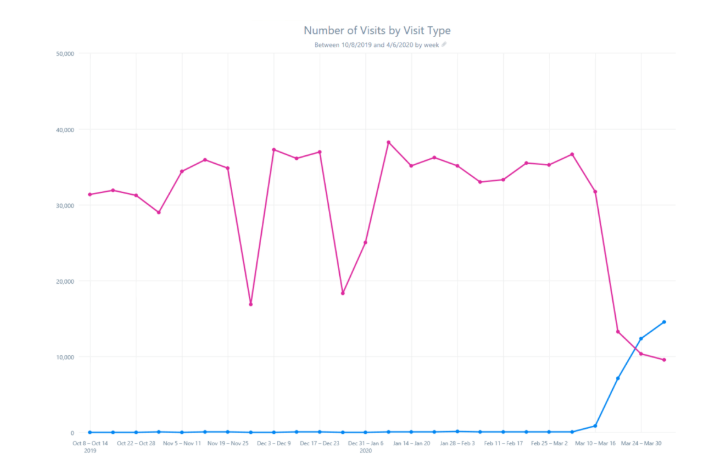
Note: The 2 blips reflected in red line seem to be for Thanksgiving and Christmas
One cannot disregard the inflection point indicating virtual visits bypassing in-person visits. Interestingly, CT Lin described their telehealth experience prior to COVID-19 stating
“We came up with all sorts of leadership plans to increase video visits: more education to front-line physicians (not helpful); sending experts to clinic to tout the benefits (nope); introducing video visits to clinicians already on bundled payments, such as surgeons whose post-op visits were no-fee (slight adoption). Video visit adoption was a local phenomenon: a few docs found it useful and did several hundred visits that way over the course of a year, and most others did not try it. Finally, we did get some traction by dedicating some urgent care docs to Virtual Urgent Care, for either a flat $49 fee or co-pay with participating insurers. For the most part though,nothing at all.”
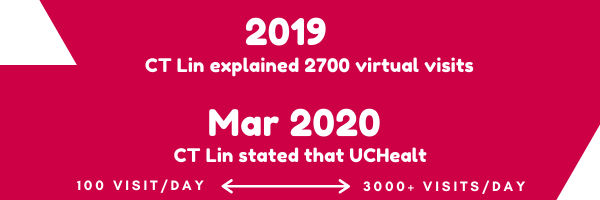
Going into March 2020, CT Lin stated that UCHealth saw fewer than 100 video visits a week, following a week later, the number had increased to 3000+ visits per day. The year 2019, CT Lin explained that they did only 2700 virtual visits ( almost a dozen a day) and currently the health facility was doing 3000+ visits per day, undoubtedly a phenomenal increase.
It goes without saying that CT Lin is an innovative CMIO with a foresight to anticipate the growth of telemedicine, and in accordance making sure they were ready to fulfil the demands. Having a single Epic EHR, the IT at UCHealth worked over a year to integrate a two-way telehealth video system from Vidyo within their system. These efforts paid them dividends, setting them up for the outstanding growth of virtual visits.
Following the culmination of COVID-19 at some point in time, we are going to hear a lot of similar stories of how technology helped them control the dangerous COVID-19, this is just one of those examples.
Taking a cue from UCHealth’s experience, it can be determined that telehealth technology will play a dominant role in the virtual space. Integration of the virtual platform with the health systems EMR has taken off, as Epic’s App Orchard for telehealth supposedly is currently in use by 15 providers,
The rapid explosion of telehealth across Epic’s clients has been highlighted by the company in a press release, notably 200+ Epic customers have set up telehealth
platforms with their help. Of significance are these stats that the press release highlighted:
- Novant Health with 200 video visits a year ago have now soared to 12,000 a week
- UC San Diego Health had 6% virtual visits on 3/6, currently it’s more than 50%
- St. Joseph Health has gone live with more than 7,000 clinicians, setting up the telehealth network in only a week
- NYU Langone Medical Center which only had 20 clinicians earlier, added 1,300 virtual clinicians and currently are seeing 6,500 visits daily, a phenomenal jump of 70% virtual visits.
It’s not surprising to note that telehealth has grown, and is likely to grow further because of the pandemic, however the numbers are staggering, considering that prior to COVID – 19 providers did not consider telehealth to be worthy enough.
The next six months will see a lot of debates happening, on determining which visits should be within the scope of telehealth, and which ones would benefit from office visits. Also who decides whether the visit has to be telehealth or office, the doctor or the patient? There will also be discussions identifying the telehealth platforms that are performing well, and the key features differentiating them. Analysis will also center around how many organizations implemented the platforms in a rush, and were facing issues, and how they would be planning to fix them.