

Quality of Care at Affordable Cost
The Affordable Care Act (ACA), enacted on March 23, 2010, offers US citizens access to quality, affordable health care by ending insurance companies’ worst exploitations, and providing new tax credits and other financial assistance to help cover the cost of care. Under the ACA, the government, insurance agencies, employers, and individuals share the responsibility to enhance the availability, quality, and affordability of health insurance coverage.
Health Insurance for All
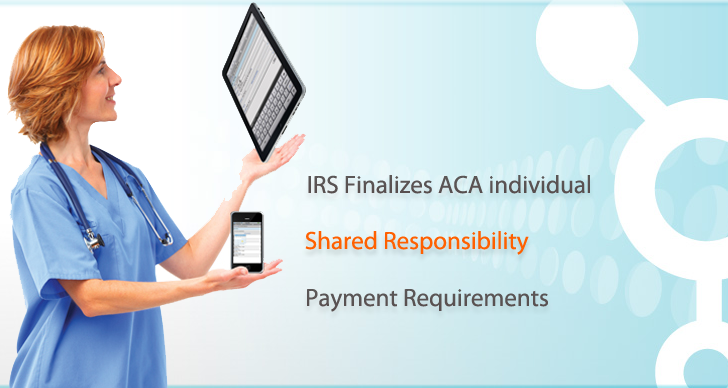
Eagerly awaited final regulations to implement the Affordable Care Act (ACA) requirement has been recently issued on Aug 27, 2013 by the Department of the Treasury and the Internal Revenue Service (IRS). This requirement mandates that each US citizen should have basic health insurance coverage, qualify for an exemption, or make a “shared responsibility” payment at the time of filing a federal income tax return, starting from 2014.
The Federal Stipulations:
- According to IRS, less than 2% of patients across the US are likely to owe a shared responsibility payment. This payment will be 1% of annual income or $95 per person in 2014, whichever is higher. The payment will further increase in 2016 to 2.5 % of income or $695 per person, whichever is greater.
- The Obama Administration is postponing the employer shared responsibility payment obligation on behalf of ACA (commonly referred to as the “employer mandate”) to January 1, 2015.
What it Covers ?
Essential coverage includes the following statutory categories:
- Coverage sponsored by the employer.
- Coverage purchased in the market.
- Coverage due to Part A of Medicare.
- Coverage from Medicaid.
- Coverage provided by the Children’s Health Insurance Program.
Who is Exempt ?
IRS has permitted exemption to employees from payment responsibility, if:
- Employees cannot afford insurance coverage.
- Employees spend less than 3 successive months without insurance coverage.
- Other reasons that enable employees to qualify for an exemption include difficulties, religious beliefs, or any other category that is statutorily-exempt. Examples of these include:
- Members of Indian tribes.
- Individuals who are incarcerated.
- Individuals who are legally absent from the country.
When will be the Benefits Realized?
At this stage, it would be pre-emptive to judge the comparative merits and demerits of the scheme with respect to the healthcare industry, the insurance companies, and the patient fraternity as a whole. These ACA implications will have to pass the test of time before their benefits are realized.


 Issues Final Regulations to Implement Affordable Care Act Requirements&summary=Last Updated: March 11, 2026 Quality of Care at Affordable Cost The Affordable Care Act (ACA), enacted on March 23,&source=https://www.billingparadise.com/blog/wp-content/uploads/2013/10/ACA.png)
 Issues Final Regulations to Implement Affordable Care Act RequirementsLast Updated: March 11, 2026 Quality of Care at Affordable Cost The Affordable Care Act (ACA), enacted on March 23,)