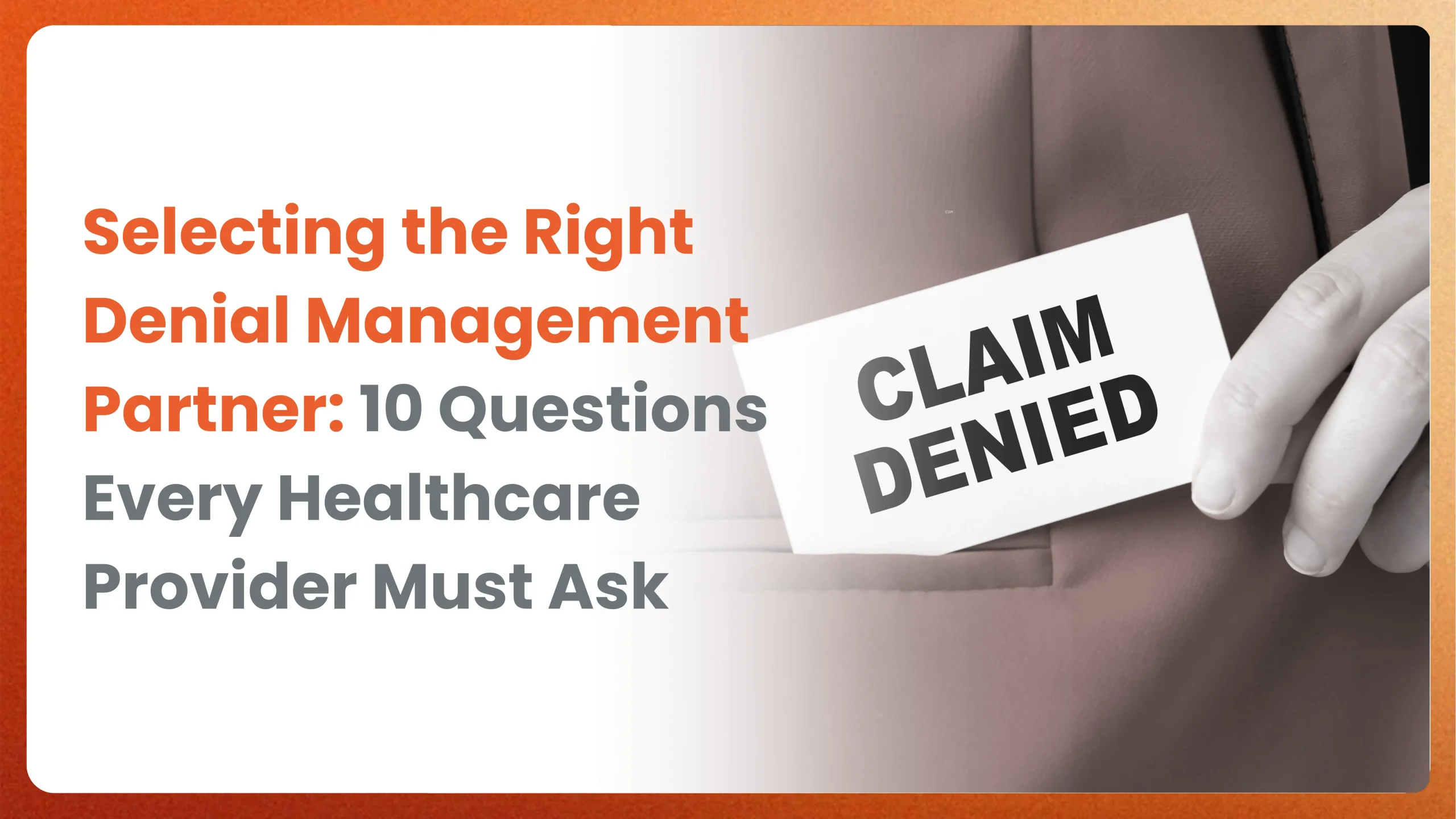
Healthcare organizations today face immense pressure to ensure that their revenue cycle operates smoothly and efficiently. Among the most challenging aspects of this cycle is denial management, which requires effective denial management solutions to minimize revenue loss and streamline processes. For hospitals, denial rates are on the rise, increasing more than 20 percent over the past five years, with average claims denial rates reaching 10 percent or more ( Journal of AHIMA ) Claims denials not only create administrative burdens but also directly impact cash flow, patient care, and organizational profitability. Without the right expertise and tools, denial management can be a source of inefficiency, causing revenue leakage and delays in reimbursement.
However, when managed effectively, denial management can significantly improve revenue cycle performance and reduce the financial impact on healthcare providers. To help healthcare organizations make an informed decision, we’ve compiled the 10 essential questions every provider must ask when evaluating potential denial management partners. Each question includes solutions for the “no” and highlights how healthcare providers can overcome it with AI by adopting denial management AI solutions.

1. Do They Have a Proven Track Record of Reducing Denials?
Why This Matters
A reliable denial management partner should not only have the expertise to handle claims effectively but also a history of success in reducing denials. Claims denials can result from various issues, including coding errors, incomplete documentation, or payer-specific policies. A partner with experience in your industry will know the common pitfalls and have strategies in place to address them.
Solution if No
If the partner cannot demonstrate a proven track record, it’s time to consider revenue cycle consultants with a strong background in reducing denials. Consultants can bring in-depth knowledge and experience from working with other healthcare organizations and can implement tailored solutions for your practice. By optimizing your internal workflows, they can reduce the number of denied claims and speed up the recovery process.
Revenue cycle consultants can also assist in identifying and addressing the underlying causes of denials, enabling your organization to avoid similar issues in the future. With their expertise, you can develop a sustainable, long-term denial management strategy.
2. Can They Provide Real-Time Insights into Denial Trends?
Why This Matters
A proactive denial management service should be able to provide real-time insights into denial trends. By tracking why denials are happening—whether due to payer issues, coding errors, or eligibility problems—providers can quickly adjust their processes to mitigate these issues in future claims.
Solution if No
If your partner doesn’t offer real-time analytics, a revenue cycle consultant or an RCM provider can help integrate technology solutions that provide valuable insights into denial trends. Consultants can implement reporting systems that capture denial data and break it down into actionable insights, helping you focus on specific issues like payer-specific trends or recurring coding errors.
With this type of actionable data, healthcare providers can make informed decisions, adjust their processes, and improve their claim acceptance rate.
3. Do They Offer a Comprehensive Approach to Denial Management?
Why This Matters
A report published in November showed that overall plan denials have increased by nearly 56%, while commercial plan denials have increased by over 20% (HFMA). Denial management should not be a one-off process. A comprehensive approach involves proactive denial prevention, timely follow-up, robust reporting and appeals management. Simply handling denials as they arise doesn’t address the root causes of the issues. Instead, healthcare organizations should work with partners who help them assess and improve their end-to-end denial management processes.
Solution if No
If your partner is not offering comprehensive denial management solutions, engaging with an RCM provider is a good step forward. Consultants can evaluate your current processes and provide a strategic roadmap for improvement. They can help with everything from training staff on proper coding procedures to identifying and addressing operational inefficiencies that may lead to denials.
Consultants can also develop a process for continuous improvement, ensuring that your organization is not only reacting to denials but actively preventing them.
4. Do They Utilize Technology to Streamline Denial Management?
Why This Matters
The role of technology in denial management cannot be overstated. Automation tools, AI-driven analytics, and machine learning systems can reduce human error and enhance the accuracy of claims submission when adopting the best denial management automation solutions. From automatic coding verification to real-time payer validation, technological advancements are critical to improving the speed and efficiency of the denial management process.
Solution if No
If your denial management partner isn’t leveraging technology, consider bringing in a revenue cycle consultant who can integrate AI and automation into your denial management solutions. By implementing tools like automated coding checks or AI-driven analytics, consultants can help streamline your denial management process, reduce errors, and identify opportunities for improvement faster
Automation can also reduce administrative burden, freeing up staff to focus on more complex tasks and ultimately improving your organization’s ability to recover denied claims.
5. Are They Familiar with the Specific Denial Issues in Your Specialty?
Why This Matters
Every healthcare specialty faces unique challenges when it comes to claims denials. For example, behavioral health providers may experience higher denial rates due to specific coding and documentation issues, while cardiology practices may face denials based on payer authorization requirements. Your partner must understand the nuances of your specialty to provide tailored denial management solutions.
Solution if No
If your partner lacks experience in your specialty, consider working with an RCM provider who specializes in your area of healthcare. These consultants will be familiar with the common denial issues faced by your specialty and can offer targeted solutions to address those challenges.
For example, in behavioral health, consultants can guide your practice in meeting payer requirements for authorizations or improve documentation to prevent denials. Their expertise will ensure that you are not only resolving current denials but also preventing future ones.
6. Can They Improve Your Internal Processes to Prevent Future Denials?
Why This Matters
Preventing denials is far more effective than dealing with them after the fact. A proactive denial management solutions provider should help you address issues that lead to denials, including training staff, improving coding accuracy, and refining your payer communication processes.
Solution if No
If your current partner isn’t helping you improve internal processes, a revenue cycle expert can evaluate your workflows and recommend improvements. They can conduct audits to identify inefficiencies or compliance gaps in your claims process and provide actionable recommendations for improvement.
They can also assist in training your staff on best practices for coding, documentation, and payer interactions, reducing the likelihood of future denials.
7. Do They Offer Detailed Reports and Analytics on Denial Causes?

Why This Matters
To truly understand why denials are happening, your denial management partner should provide detailed reports and analytics on denial causes within your denial management solutions. This data is essential for pinpointing recurring issues and identifying areas for improvement. The more detailed the reports, the more effectively you can address the underlying problems.
Solution if No
If your current partner doesn’t offer detailed analytics, consider working with a RCM provider who can set up comprehensive reporting systems. These consultants can provide detailed insights into the reasons behind denials, whether they are related to payer-specific issues, coding errors, or incomplete documentation.
Consultants can also implement systems that allow you to track denials over time and make data-driven decisions that improve your denial management strategy.
8. Can They Assist with Appeal Management?
Why This Matters
Appeals management is a critical part of the denial management process. When a claim is denied, having an efficient system in place to appeal the decision is vital to recovering lost revenue. Your denial management partner should be skilled in handling appeals, including tracking progress and ensuring timely follow-up.
Solution if No
If your partner is not effectively managing appeals, a revenue cycle consultant can help streamline this process. Consultants can assist with creating an efficient appeals workflow, providing training on best practices, and ensuring timely follow-up on all denied claims.
By improving your appeal management process, consultants can help increase your appeal success rate and minimize revenue loss.
9. Do They Offer Scalability to Grow with Your Practice?
Why This Matters
As your practice grows, the complexity of your denial management needs will also increase. Your denial management provider should be able to scale their services to meet the evolving demands of your organization. Scalability ensures that as your patient base grows, your denial management processes remain effective and efficient.
Solution if No
If scalability is an issue with your current partner, a revenue cycle consultant can help you structure your denial management process to be more adaptable. Consultants can assist in developing flexible systems that can scale with your organization, ensuring that your denial management strategy can handle future growth.
10. Do They Provide Transparent and Timely Communication?
Why This Matters
Clear and transparent communication is essential for a successful partnership. Your denial management partner should provide regular updates, detailed reports, and be easily reachable for questions or concerns. Without good communication, it’s difficult to stay on top of denials and make informed decisions.
Solution if No
If your partner isn’t communicative, a revenue cycle consultant can help establish better communication protocols. Consultants can provide regular check-ins, progress updates, and ensure that key stakeholders are kept informed about the status of claims and denials.








Conclusion
If the answers to these key questions are unsatisfactory, revenue cycle consultants can help fill the gaps. With their expertise in denial management, consultants can enhance your processes, integrate technology, and provide guidance to ensure long-term success.
One such company is BillingParadise, a 20-year-old revenue cycle and healthcare AI and automation company. BillingParadise provides complete revenue cycle management services, staff support for revenue cycle operations, and RCM AI and automation solutions. Their evidence-based solutions help healthcare leaders address their denial management challenges and optimize their revenue cycle, improving financial performance and operational efficiency.’
By partnering with the right denial management team and implementing best practices, healthcare providers can significantly reduce denials, recover lost revenue, and streamline their operations for long-term success.