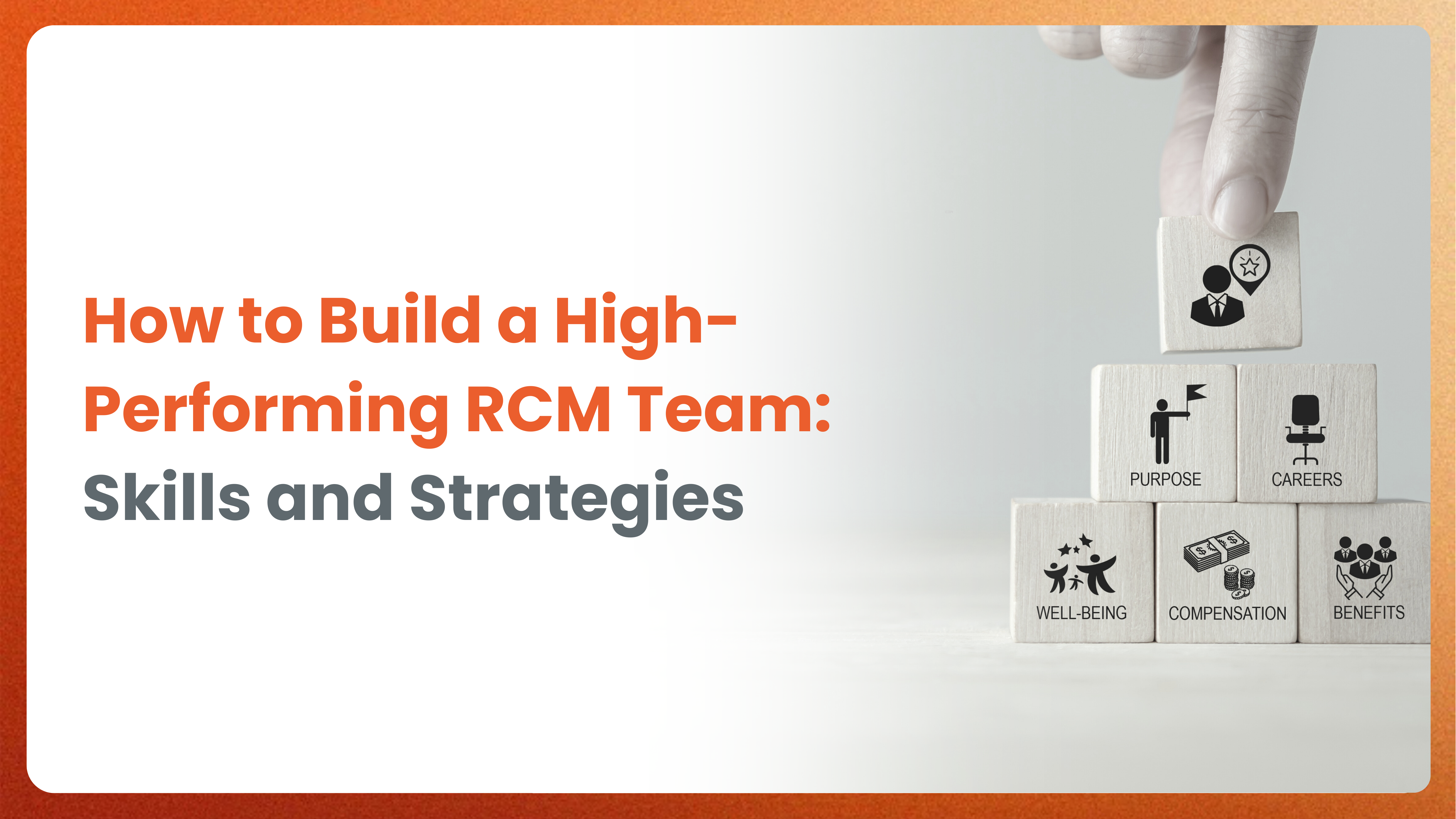
A well-structured Revenue Cycle Management (RCM) team is essential for healthcare organizations aiming to optimize financial performance with the best RCM Strategies while maintaining quality patient care with the best revenue cycle management services. 90% of hospitals employing a strong clinical documentation improvement (CDI) program with skilled specialists earned at least $1.5 million more through reimbursements and healthcare revenue ( National Library Of Medicine ). A high-performing RCM team not only ensures steady cash flow but also minimizes denials, enhances patient satisfaction, and improves overall efficiency. This guide outlines the essential skills and strategies to build a strong RCM team that drives results.

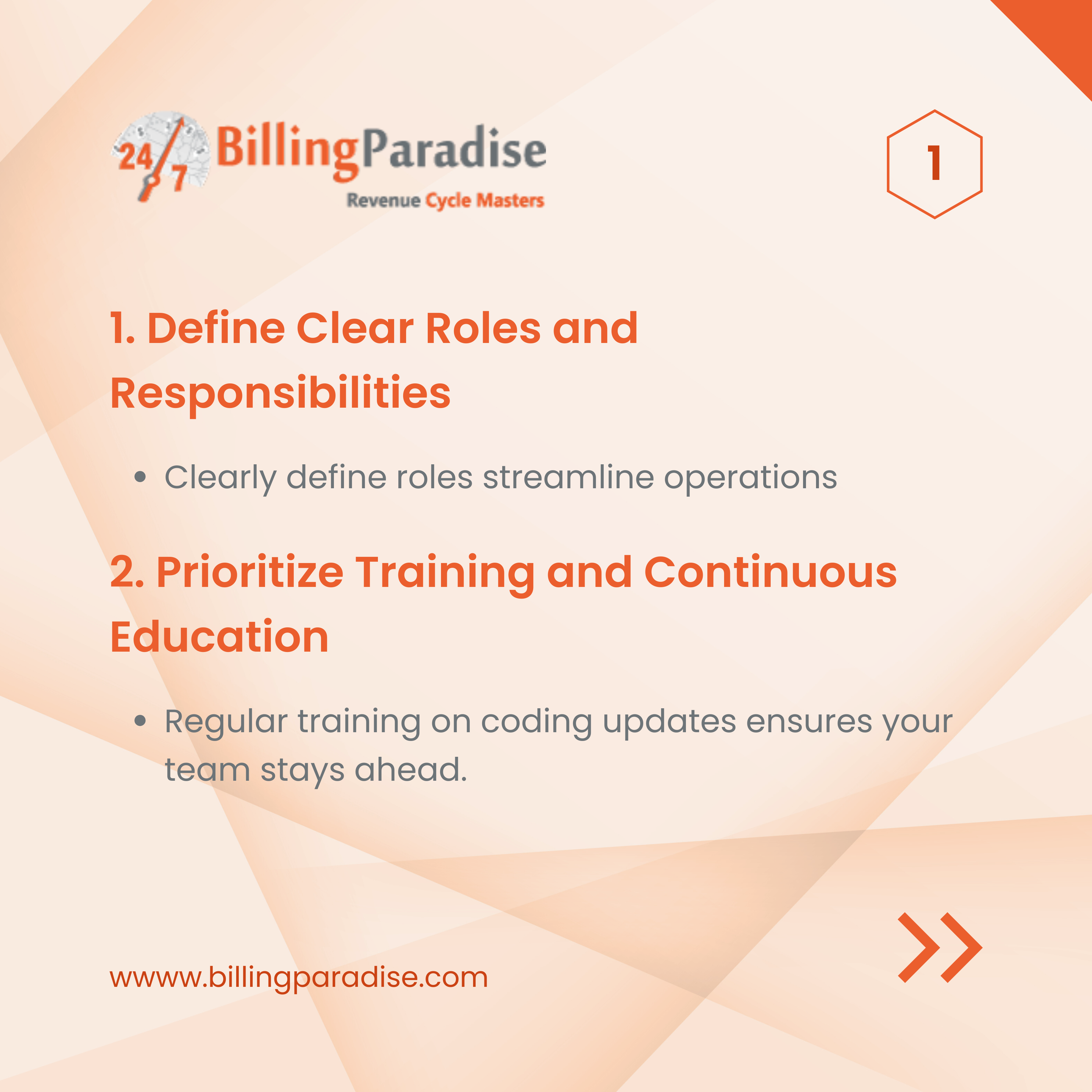
1. Define Clear Roles and Responsibilities
An efficient RCM team starts with well-defined roles modulating strong RCM Strategies. Every team member should have a clear understanding of their responsibilities to avoid duplication of work and inefficiencies. Key roles in a high-performing RCM team include:
- Medical Coders – Accurately translate medical services into standardized codes for billing.
- Billing Specialists – Ensure proper claim submission and follow up on unpaid claims.
- Payment Posting Specialists – Record and reconcile payments received from payers and patients.
- Denial Management Analysts – Identify, analyze, and resolve claim denials.
- RCM Managers – Oversee revenue cycle performance and implement process improvements.
Clearly outlining responsibilities helps prevent errors, reduces redundancy, and promotes accountability within the team.
A successful RCM team also includes compliance officers who ensure adherence to federal and state regulations, financial counselors who assist patients in understanding their bills and payment options, and data analysts who assess revenue trends to help the team make informed decisions. A well-rounded team ensures all aspects of revenue cycle management are covered efficiently.
2. Prioritize Training and Continuous Education
Additionally, a 2024 analysis by HealthEdge noted that 2023 was one of the most active regulatory years in recent history for the healthcare industry ( Healthedge ). Healthcare regulations, payer policies, and coding guidelines frequently change, making continuous education a necessity for RCM teams, which is seen as a major aspect in the RCM strategies. Regular training programs help staff stay up to date with:
- Changes in medical coding (ICD, CPT, and HCPCS updates)
- Compliance regulations (HIPAA, CMS guidelines, and payer policies)
- Denial trends and appeal strategies
- Emerging healthcare technologies, including AI and automation
Encouraging certification programs such as Certified Professional Coder (CPC) or Certified Revenue Cycle Specialist (CRCS) further enhances the competency of team members. Many healthcare organizations provide access to training through industry webinars, professional conferences, and in-house workshops.
Cross-training team members is also a valuable strategy. When billing specialists understand coding principles and payment posting specialists understand denial management, the team operates more efficiently. This flexibility helps mitigate staffing shortages and ensures workflow continuity.
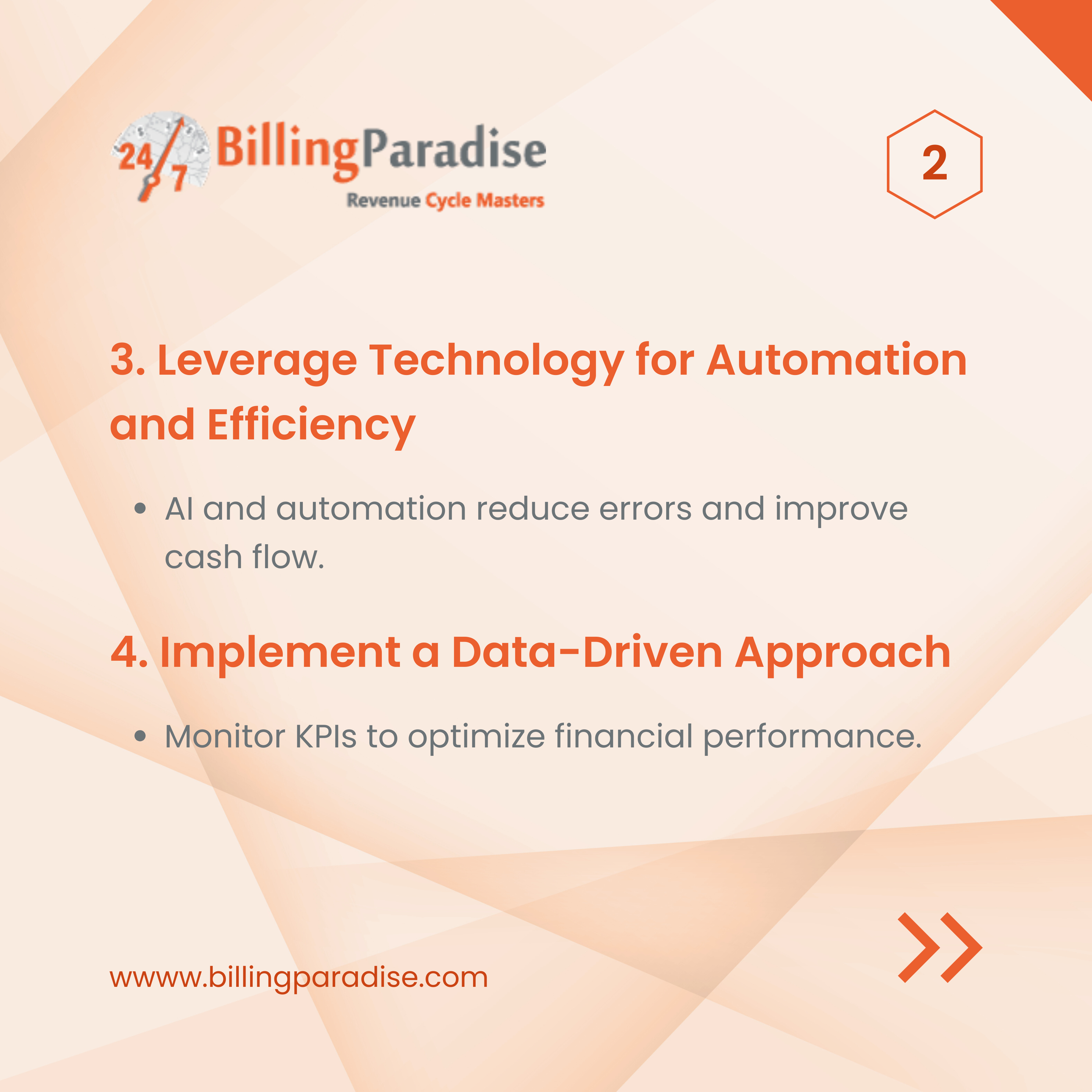
3. Leverage Technology for Automation and Efficiency
Technology plays a crucial role in improving the efficiency of an RCM team & defining RCM Strategies. Implementing AI-driven tools and automation solutions can streamline repetitive tasks and reduce human errors. Key areas where automation makes a difference include:
- Eligibility Verification AI – Automated verification ensures accurate insurance information before service delivery.
- Claim Scrubbing – AI-powered tools detect and correct errors before claims are submitted.
- Denial Management – Automated workflows prioritize and track claim rejections, speeding up resolution.
- Patient Payment Solutions – Digital payment options and automated reminders improve patient collections.
Implementing robotic process automation (RPA) further improves efficiency by reducing manual data entry errors and accelerating tasks such as claims processing and follow-up. Revenue cycle leaders should stay updated on new technologies that can optimize performance and reduce administrative burdens.

4. Implement a Data-Driven Approach
A high-performing RCM team relies on RCM Strategies, data analytics to identify revenue leakage and optimize financial performance. Implementing key performance indicators (KPIs) helps measure success and highlight areas for improvement. Important KPIs to track include:
- Days in Accounts Receivable (A/R) – Measures how long it takes to collect payments.
- Clean Claim Rate – Percentage of claims processed without errors on the first submission.
- Denial Rate – Percentage of claims denied by payers.
- Patient Collection Rate – Measures the effectiveness of patient payment processes.
Regularly analyzing these metrics allows RCM teams to make data-driven decisions that improve revenue cycle efficiency. Predictive analytics can also help identify potential denial risks, enabling proactive intervention before claims are submitted.
Benchmarking against industry standards ensures that performance is on par with leading healthcare organizations. High-performing teams use these insights to fine-tune billing processes, optimize collections, and improve cash flow stability.
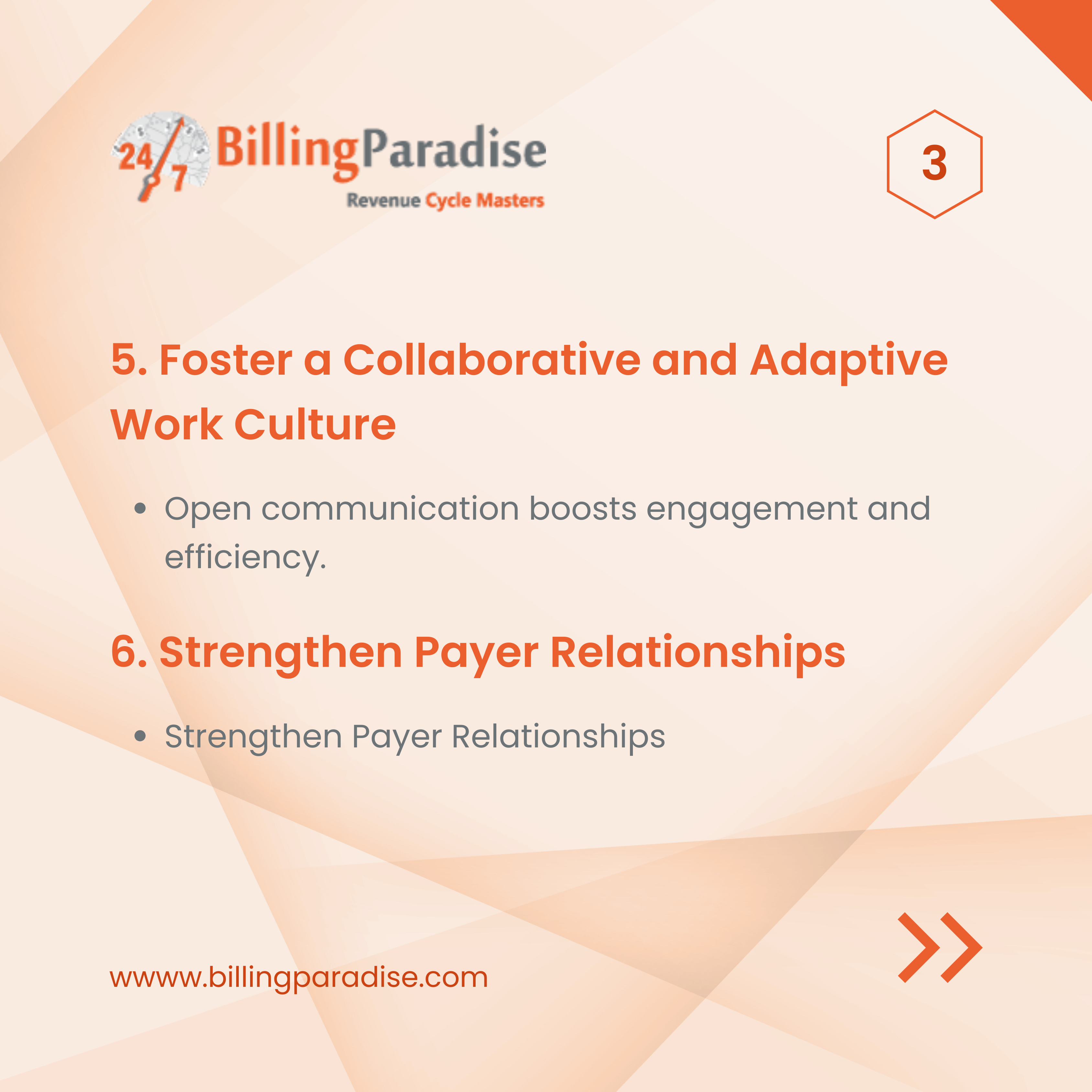
5. Foster a Collaborative and Adaptive Work Culture
Building a high-performing RCM team requires a culture that encourages collaboration, problem-solving, and adaptability, and is denoted as the main notion in the RCM Strategies.This can be achieved by:
- Encouraging open communication between departments such as front desk, coding, and billing.
- Setting performance goals and providing incentives for achieving benchmarks.
- Holding regular team meetings to discuss challenges, share insights, and optimize workflows.
- Promoting a continuous improvement mindset by analyzing failures and implementing corrective measures.
A positive and adaptive work environment ensures the team remains motivated, engaged, and proactive in resolving revenue cycle challenges. Leaders should also foster a culture of accountability, where team members take ownership of their roles and strive for excellence in revenue cycle processes.
6. Strengthen Payer Relationships for Faster Reimbursement
A successful RCM team with the right RCM Strategies, builds strong relationships with payers to minimize claim denials and payment delays. Strategies to improve payer collaboration include:
- Understanding payer policies and reimbursement guidelines.
- Establishing direct communication channels with payer representatives.
- Proactively resolving disputes and negotiating reimbursement rates when necessary.
- Conducting regular payer audits to identify trends and improve claim acceptance rates.
Better payer relationships lead to fewer disputes, faster payments, and improved cash flow. Scheduling quarterly payer meetings can help address common claim rejection issues and create smoother reimbursement workflows.
7. Focus on Patient-Centric Billing
Patient experience is an essential part of revenue cycle success and streamlined RCM Strategies. A transparent and efficient billing process helps build patient trust and improves collections. Key strategies include:
- Providing upfront cost estimates and clear explanations of bills.
- Offering flexible payment options, including online portals and installment plans.
- Ensuring responsive customer service to address patient billing inquiries.
- Implementing user-friendly statements that simplify healthcare costs for patients.
By prioritizing patient-friendly billing practices, healthcare organizations can improve collections and enhance patient satisfaction. Patient education initiatives on financial responsibility and available assistance programs further reduce payment delays.
8. Partner with an Experienced RCM Consultant
Even with a well-structured RCM team and RCM Strategies, healthcare organizations often need expert guidance to optimize revenue cycle operations. Partnering with a seasoned RCM consultant can help:
- Identify inefficiencies and implement best practices.
- Provide temporary or permanent staff support for RCM functions.
- Integrate AI and automation solutions to enhance revenue cycle workflows.
- Ensure compliance with evolving industry regulations.



BillingParadise: Your Trusted RCM Partner
BillingParadise is a 20-year-old revenue cycle and healthcare AI and automation company. We provide complete revenue cycle management services, staff support for revenue cycle operations, and RCM AI and automation solutions. BillingParadise provides evidence-based solutions for healthcare leaders to resolve their challenges and streamline revenue cycle processes efficiently.
By implementing the right skills and strategies, healthcare organizations can build a high-performing RCM team that ensures financial stability, reduces administrative burdens, and enhances patient care. The right mix of skilled professionals, cutting-edge technology, data-driven decisions, and expert guidance will set your organization up for long-term revenue cycle success.