Revenue Cycle Management (RCM Analytics) has evolved from being just a reporting tool to a strategic asset for improving the finances of the healthcare organizations. Each year, health care payers and providers in the United States spend about $496 billion on billing and insurance-related (BIR) costs ( Center For American Progress ). With the right approach, healthcare providers can leverage Healthcare RCM analytics to enhance financial performance, improve operational efficiency, and drive informed decision-making. However, without a structured implementation plan, even the most comprehensive analytics can fail to deliver meaningful results. This blog explores how healthcare organizations can transform RCM data into actionable insights and highlights the role of revenue cycle management consultants in implementing tailored solutions.
Understanding the Value of RCM Analytics
RCM analytics provides healthcare organizations with crucial insights into key financial indicators, including claim denials, reimbursement trends, patient payment behaviors, and operational inefficiencies. By tracking these metrics, organizations can pinpoint revenue leakage, identify workflow bottlenecks, and develop strategies to optimize financial performance.
For example, a hospital that experiences a high volume of claim denials can use RCM analytics to categorize denial reasons, determine patterns, and implement corrective measures. Without Hospital revenue cycle analytics-driven insights, revenue cycle teams often rely on reactive rather than proactive strategies, leading to persistent financial challenges.
Transforming Data into Actionable Insights
While healthcare organizations collect vast amounts of RCM data, the challenge lies in interpreting and utilizing it effectively. Here’s how providers can turn metrics into financial success:
1. Identifying and Prioritizing Key Metrics
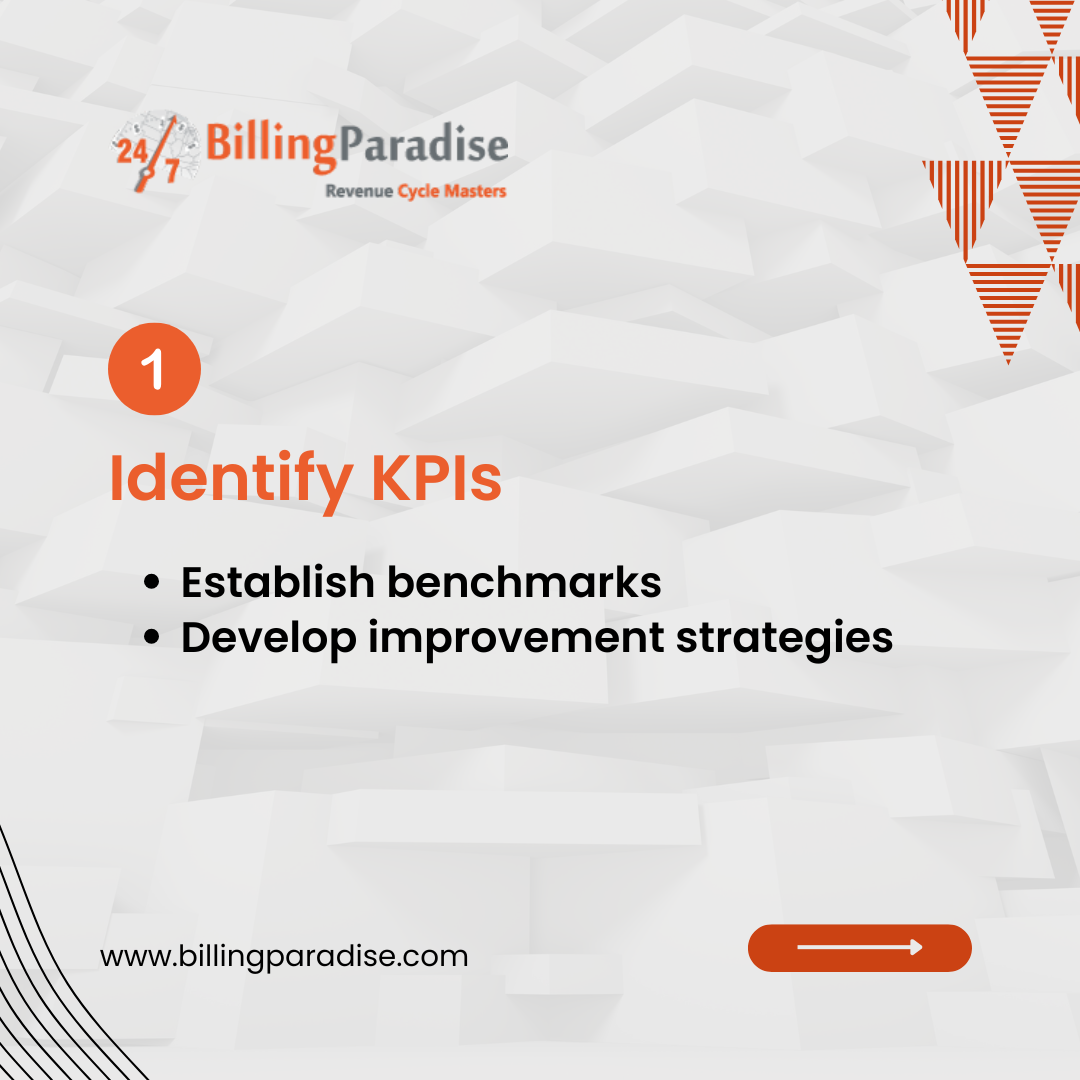
Not all RCM data holds equal value. Healthcare organizations must prioritize RCM key performance indicators (KPIs) that directly impact financial outcomes. Some of the most impactful metrics include:
- Denial Rate: Understanding root causes of denials and working on proactive denial prevention strategies.
- Days in Accounts Receivable (A/R): Identifying delays in reimbursements and implementing faster claim resolution approaches.
- Net Collection Rate: Measuring the effectiveness of revenue collection efforts.
- Patient Payment Trends: Analyzing patient billing experiences and optimizing payment workflows.
To make the best use of these KPIs, healthcare organizations should establish benchmarking standards, comparing their performance to industry best practices. By doing so, they can identify areas that require immediate improvement and develop strategies to achieve measurable progress.
2. Leveraging Predictive Hospital Revenue Cycle Analytics for Proactive Decision-Making
Predictive Hospital revenue cycle analytics allows healthcare organizations to foresee potential revenue cycle disruptions and take corrective action before issues escalate. By analyzing historical data, machine learning models can forecast denial trends, predict cash flow fluctuations, and suggest revenue optimization strategies.
For instance, predictive analytics can help identify which claims are likely to be denied based on past trends, enabling preemptive corrections that increase first-pass claim acceptance rates. This not only reduces rework but also accelerates cash flow.
Additionally, organizations can use predictive analytics to segment patients based on their likelihood to pay medical bills on time. By offering flexible payment plans and proactive engagement strategies, providers can enhance collections while reducing patient financial distress.
3. Automating RCM Processes for Greater Efficiency
RCM Analytics AI significantly enhances the ability to act on Hospital revenue cycle analytics. By integrating automated workflows, healthcare organizations can streamline claims processing, reduce manual errors, and improve staff efficiency. Key areas where automation enhances RCM include:
- Automated claim scrubbing to detect and correct errors before submission.
- AI-driven denial management to categorize and resolve denials faster.
- Patient billing automation to simplify payment collection and reduce outstanding balances.
When combined with RCM analytics, automation not only improves operational efficiency but also drives financial growth by reducing revenue leakage and improving reimbursement turnaround times.
Moreover, automation can help optimize staff allocation, ensuring that human resources focus on high-value tasks such as complex denial resolution and patient financial counseling rather than repetitive administrative processes.
4. Enhancing Revenue Integrity with Data-Driven Compliance
Regulatory compliance is a critical aspect of revenue cycle management, and analytics play a pivotal role in ensuring adherence to coding guidelines, payer policies, and reimbursement regulations.Health systems, hospitals and PAC providers spend nearly $39 billion a year solely on the administrative activities related to regulatory compliance ( American Hospital Association ) Healthcare RCM analytics can highlight compliance risks, detect billing anomalies, and flag discrepancies that may lead to audits or financial penalties.
By actively monitoring compliance metrics, healthcare organizations can mitigate risks, avoid costly errors, and maintain a financially sound revenue cycle. This is especially important in an era of evolving payer requirements and government regulations, where non-compliance can result in significant financial setbacks.
Additionally, analytics-driven compliance tracking can help organizations identify training gaps within their billing and coding teams, allowing for targeted education programs that enhance accuracy and reduce errors.
5. Engaging Leadership with Data-Backed Strategies
Healthcare executives and CFOs require actionable insights to make informed financial decisions. Instead of presenting raw data, revenue cycle leaders should focus on delivering strategic insights backed by data visualization and trend analysis.
For example, instead of reporting that the organization’s denial rate is 15%, leadership should be presented with an analysis showing:
- The financial impact of these denials in dollar value.
- Specific payer policies contributing to denials.
- Steps taken to reduce denial rates and their projected financial benefits.
By presenting data in a way that supports strategic decision-making, healthcare organizations can foster a culture of continuous financial improvement. Dashboards and real-time analytics reports can also empower leaders with instant access to key metrics, enabling quick responses to emerging challenges.

The Role of Revenue Cycle Management Consultants in Healthcare RCM Analytics Implementation
While many healthcare organizations recognize the importance of RCM analytics, implementing a tailored analytics strategy can be challenging. Revenue cycle management consultants help bridge the gap between data collection and actionable financial success by providing expertise in:
- Customizing RCM analytics platforms to align with organizational goals.
- Implementing AI and automation solutions for enhanced revenue cycle performance.
- Training revenue cycle teams to interpret and act on analytics insights.
- Optimizing claim submission and denial management through data-driven strategies.
Consultants also play a critical role in helping healthcare organizations adopt a value-based approach to revenue cycle management, ensuring that financial strategies align with overall patient care and operational objectives. Through ongoing monitoring and continuous optimization, consultants provide long-term guidance to sustain revenue cycle improvements.
Conclusion
Healthcare RCM analytics is no longer just about tracking metrics—it’s about transforming data into financial success stories. By prioritizing key metrics, leveraging predictive Hospital revenue cycle analytics, automating processes, ensuring compliance, and engaging leadership with data-driven strategies, healthcare organizations can maximize their revenue cycle performance.
At the forefront of this transformation is BillingParadise, a 20-year-old revenue cycle and healthcare AI and automation company. We provide complete revenue cycle management services, staff support for revenue cycle operations, and RCM AI and automation solutions. BillingParadise offers evidence-based solutions to help healthcare leaders resolve their challenges, ensuring they not only track metrics but also turn them into meaningful financial outcomes.