Healthcare is undergoing rapid transformation, driven by technological advancements, shifting regulations, and an increasing demand for patient-centered care. Although the doctor’s characteristics, waiting time, medical care, and information provided remain the most used criteria with a percentage of 43%, 38%, 28%, and 27% each determining overall patient experience robust administration, and efficient revenue cycle management plays a significant role too ( National Library of Medicine ) . In this dynamic environment, healthcare organizations are searching for healthcare leadership candidates who possess a unique blend of skills to navigate these changes effectively. Successful healthcare leadership community must be capable of fostering innovation, driving operational efficiency, and ensuring financial sustainability while keeping patient care at the forefront of their priorities.
In this blog, we will explore the top 8 leadership skills that healthcare organizations are actively seeking. We will also discuss how a person in the healthcare leadership role can enhance their performance by leveraging the expertise of revenue cycle management (RCM) consultants with their revenue cycle management service. RCM consultants play a vital role in optimizing financial processes, allowing healthcare leaders to focus on strategic priorities without getting bogged down by administrative and operational challenges.

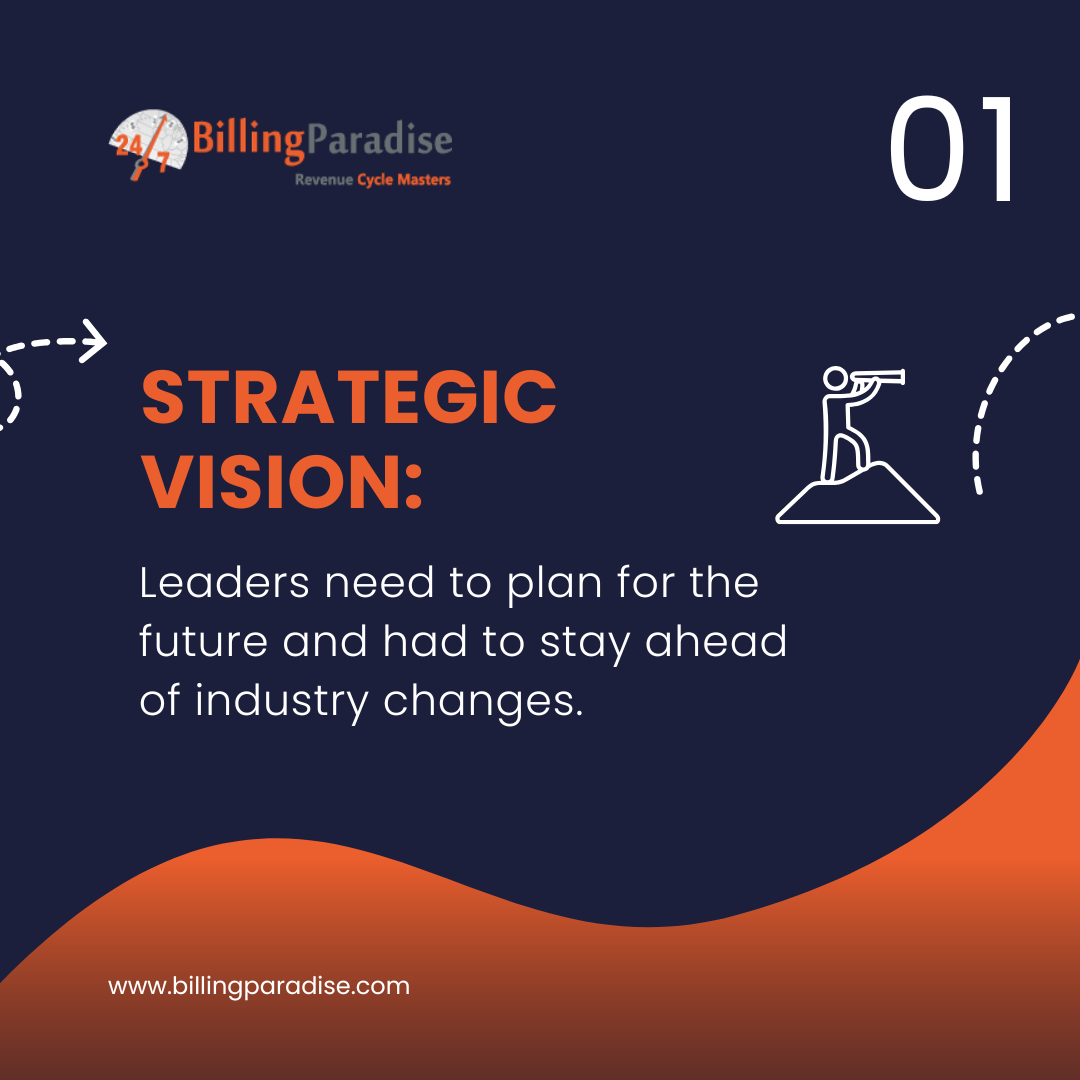
1. Strategic Vision
Healthcare leadership is about having a strategic vision that aligns with the organization’s long-term goals. As the industry becomes increasingly complex, leaders must look beyond immediate concerns and focus on future growth opportunities, including technological innovation, new patient care models, and financial sustainability.
A leader with a strategic mindset will not only anticipate changes but also position the organization to take advantage of them. This involves setting clear objectives, developing action plans, and ensuring all departments are aligned with the organization’s overall mission.
How RCM Consultants Help: Revenue cycle management consultants can assist in aligning financial strategies with overall organizational goals. By optimizing revenue streams and improving cash flow, they ensure that the organization has the financial resources needed to execute its long-term vision.
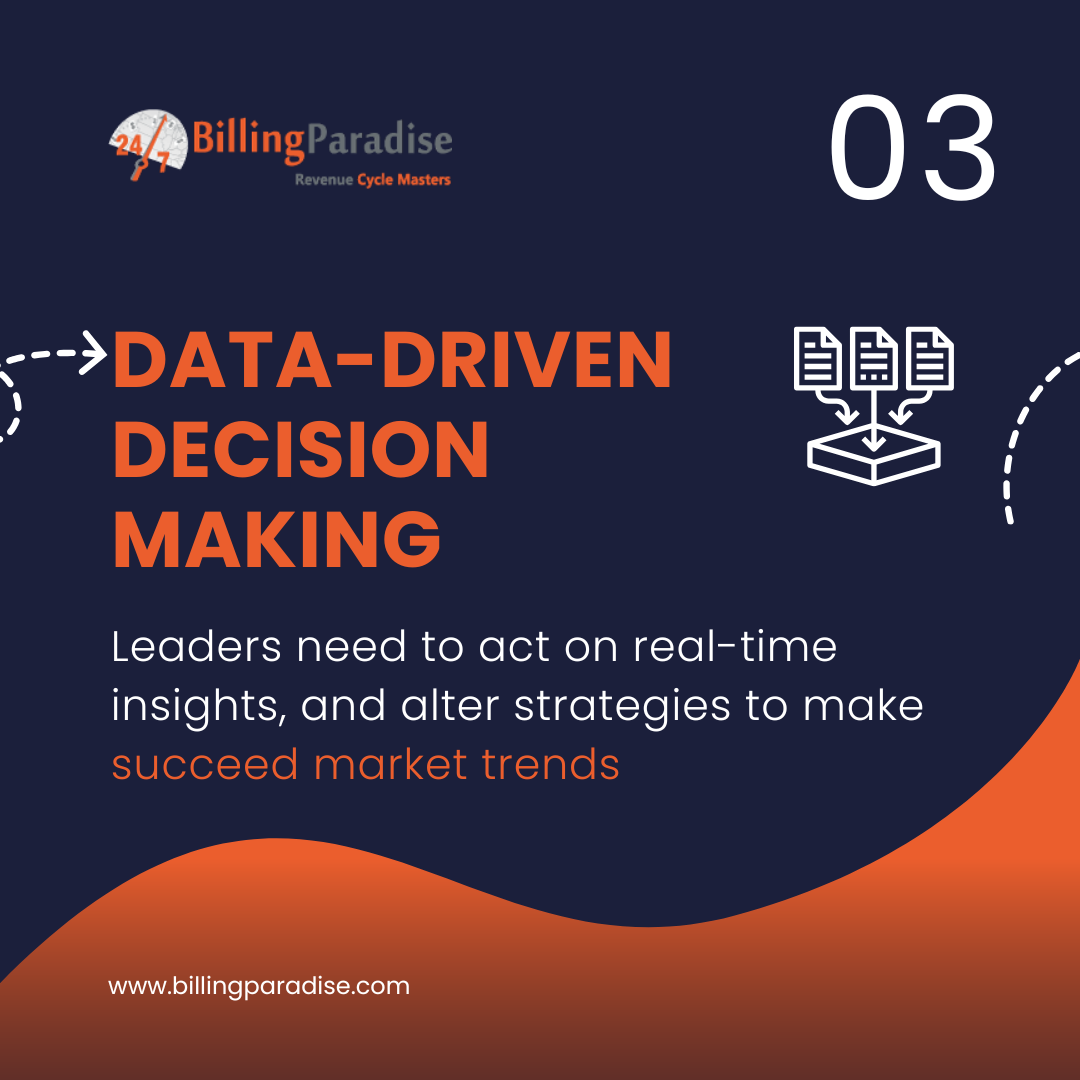
3. Data-Driven Decision Making
Data is one of the most powerful tools available to healthcare leaders. The ability to interpret data and translate it into actionable insights is essential for making informed decisions. Healthcare leadership skills is about utilizing data to monitor key performance indicators (KPIs), track patient outcomes, and identify operational inefficiencies.
Healthcare leadership skills is about making data-driven decision-making spot trends, anticipate challenges, and make timely adjustments to strategies. Whether it’s managing patient flow, improving clinical outcomes, or optimizing financial performance, a person with healthcare leadership skills must be comfortable working with data at every level.
How RCM Consultants Help: RCM consultants offer advanced data analytics solutions that help healthcare leaders gain a clearer picture of their revenue cycles. By analyzing trends in billing, coding, and claims management, consultants help leaders make evidence-based decisions to improve financial outcomes and operational efficiency.
3. AI for Revenue Cycle Management: Maximizing Financial Performance
One of the most promising areas where AI can make an immediate impact is in revenue cycle management. The financial health of a healthcare organization depends on efficient and accurate billing processes, and AI can streamline many aspects of RCM, from coding and claim submission to denial management.
-
- Automated Claim Submission: AI can automate the process of submitting claims to payers, reducing errors and speeding up the reimbursement cycle. This ensures that healthcare providers receive payments more quickly, improving cash flow.
- AI Denial Prevention and Management: AI can flag potential issues with claims before they are submitted, preventing denials. For denied claims, AI-powered tools can analyze the reasons for denial and suggest the best course of action for appeal, leading to faster resolutions and fewer lost revenue opportunities.
- Coding Accuracy: Medical coding automation can detect coding errors and discrepancies in documentation, ensuring that claims are submitted with the correct information. This reduces the likelihood of audits and costly rework.
- Payment Integrity: AI can also help identify overpayments, underpayments, or fraudulent claims, protecting healthcare organizations from financial losses due to incorrect billing.
Over the next five years, healthcare organizations that invest in AI-driven RCM solutions will experience more efficient revenue cycles, better cash flow, and fewer financial risks. The ability to automate billing and coding processes while improving accuracy will be a game-changer for many providers.

View the detailed post on LinkedIn
4. Adaptability and Agility
The healthcare industry is constantly evolving, and healthcare leadership skills is about adapting to changing circumstances quickly. Whether it’s adjusting to new regulations, implementing new technologies, or responding to unexpected crises, healthcare leaders need to be flexible and agile in their approach.
In an era where healthcare organizations are dealing with disruptive innovations like telehealth, artificial intelligence (AI), and value-based care models, the healthcare leadership skills are about being able to pivot swiftly while maintaining operational stability are in high demand.
How RCM Consultants Help: As healthcare regulations and payer requirements change, RCM consultants keep leaders updated on the latest compliance issues. They help organizations adjust their billing and revenue cycle processes to stay ahead of regulatory shifts, ensuring smooth transitions without financial disruptions.
5. Collaboration and Team Building
Healthcare is a team-based field, and effective collaboration is essential for providing high-quality care. Healthcare leadership is about adopting and fostering a culture of teamwork and communication across departments, from clinical staff to administrative teams. Strong collaboration ensures that all parts of the organization are working in unison to achieve common goals, such as improving patient care and operational efficiency. Healthcare professionals reported feeling burned out, up from 42% last year and thus it is the responsibility of the leader to streamline the administrative process ( Philips )
Team building also plays a critical role in developing future healthcare leadership community. Healthcare leaders need to mentor and empower their teams, ensuring that employees have the skills and support they need to succeed.
How RCM Consultants Help: RCM consultants work closely with leadership teams to improve collaboration between clinical and administrative departments. By streamlining billing and coding workflows, they help reduce bottlenecks, ensuring that all teams can focus on delivering high-quality care and maintaining operational efficiency.
6. Technological Savvy
In today’s healthcare environment, leaders must be comfortable with technology. From electronic health records (EHR) systems to AI-driven diagnostics and telehealth platforms, technology is central to delivering efficient and effective patient care. Leaders must not only understand how to implement these technologies but also how to use them to enhance operational performance and patient outcomes.
Healthcare organizations are increasingly relying on technology to reduce costs, improve care coordination, and optimize resource allocation. Leaders who are comfortable with digital transformation will be better positioned to drive innovation and maintain a competitive edge.
How RCM Consultants Help: RCM consultants assist leaders in adopting healthcare AI and automation technologies that improve the efficiency of revenue cycle operations. By implementing advanced billing systems and AI tools, consultants help healthcare organizations reduce errors, speed up claim processing, and enhance overall financial performance.
7. Patient-Centered Focus
At the heart of every healthcare organization is the patient. Leaders need to maintain a strong patient-centered focus, ensuring that care delivery is always aligned with patient needs and expectations. This means prioritizing quality of care, improving patient satisfaction, and fostering a culture of empathy and respect.
Leaders must also be mindful of patient outcomes in value-based care models, where reimbursement is tied to the quality and efficiency of care. Balancing operational goals with a commitment to patient well-being is essential for long-term success.
How RCM Consultants Help: RCM consultants support leaders in implementing patient-friendly billing systems that enhance the overall patient experience. By simplifying the billing process and improving transparency, consultants help ensure that patients understand their financial obligations and are satisfied with the care they receive.
8. Resilience and Emotional Intelligence
Leadership in healthcare can be emotionally demanding. Leaders must possess resilience and emotional intelligence to navigate the daily challenges of the healthcare environment. Whether dealing with difficult decisions, managing stress, or supporting their teams through crises, emotional intelligence helps leaders maintain a positive, productive workplace.
Resilient leaders can stay calm under pressure, adapt to adversity, and lead their teams with empathy and understanding. This is particularly important in a healthcare setting, where staff often face high-stress situations and emotional burnout.
How RCM Consultants Help: RCM consultants can alleviate some of the administrative and financial burdens that contribute to leadership stress. By taking over complex revenue cycle tasks, consultants free up leaders to focus on their teams and patients, improving overall morale and reducing burnout.
Conclusion: Leverage Expertise with BillingParadise
As healthcare organizations continue to evolve, leaders who possess these eight critical skills—strategic vision, financial acumen, data-driven decision making, adaptability, collaboration, technological savvy, patient-centered focus, and emotional intelligence—will be in the best position to drive their organizations forward.
However, even the most skilled leaders can benefit from expert support. This is where revenue cycle management consultants play a crucial role. By providing advanced insights, technology solutions, and operational support, RCM consultants help healthcare leaders optimize their financial and operational performance, allowing them to focus on their core mission of delivering high-quality care.
BillingParadise is a 20-year-old revenue cycle and healthcare AI and automation company. We provide complete revenue cycle management services, staff support for revenue cycle operations, and RCM AI and automation solutions. BillingParadise offers evidence-based solutions to help healthcare leaders resolve their challenges and succeed in an increasingly competitive environment.
To take your leadership and healthcare organization to the next level, partner with BillingParadise and leverage our expertise in revenue cycle management and AI-driven automation solutions. Let us handle the complexities of your revenue cycle so you can focus on leading your organization into the future.