
Denials from payers are a persistent challenge for hospitals and healthcare organizations. They can significantly affect cash flow, delay patient care and strain operational resources. Whether it’s due to coding errors, missing documentation, or shifting payer policies, navigating the complexities of denials can feel like an uphill battle. A report published in November showed that MA plan denials have increased by nearly 56%, while commercial plan denials have increased by over 20% (HFMA)However, hospitals don’t have to face these challenges alone. With the right strategies and support, healthcare providers can successfully tackle payer denials, streamline revenue, and safeguard their bottom line.
This blog will explore three practical strategies that healthcare providers can implement to overcome payer denials with the implementation of a streamlined denial management service. We’ll also discuss how partnering with revenue cycle management (RCM) consultants can provide the necessary expertise to resolve denial issues efficiently.
The Impact of Payer Denials
Before diving into the strategies, let’s understand the impact payer denials have on healthcare organizations. Every denied claim represents lost revenue or delayed payment, which can cripple the financial health of an organization. Also, with changing technology an estimated 100,000 payer policy changes have happened between March 2020 and March 2022. Industry averages report that nearly 20 percent of all claims are denied, and as many as 60 percent of returned claims are never resubmitted.5 Adding to the hit on the bottom line is the cost to rework or appeal denials, which averages $25 per claim for practices and a whopping $181 per claim for hospitals ( Journal of AHIMA )
This underscores the importance of having robust denial management processes in place. It’s essential to address denials quickly and effectively to prevent revenue leakage, minimize administrative burden, and ensure patients receive the care they need without unnecessary delays.
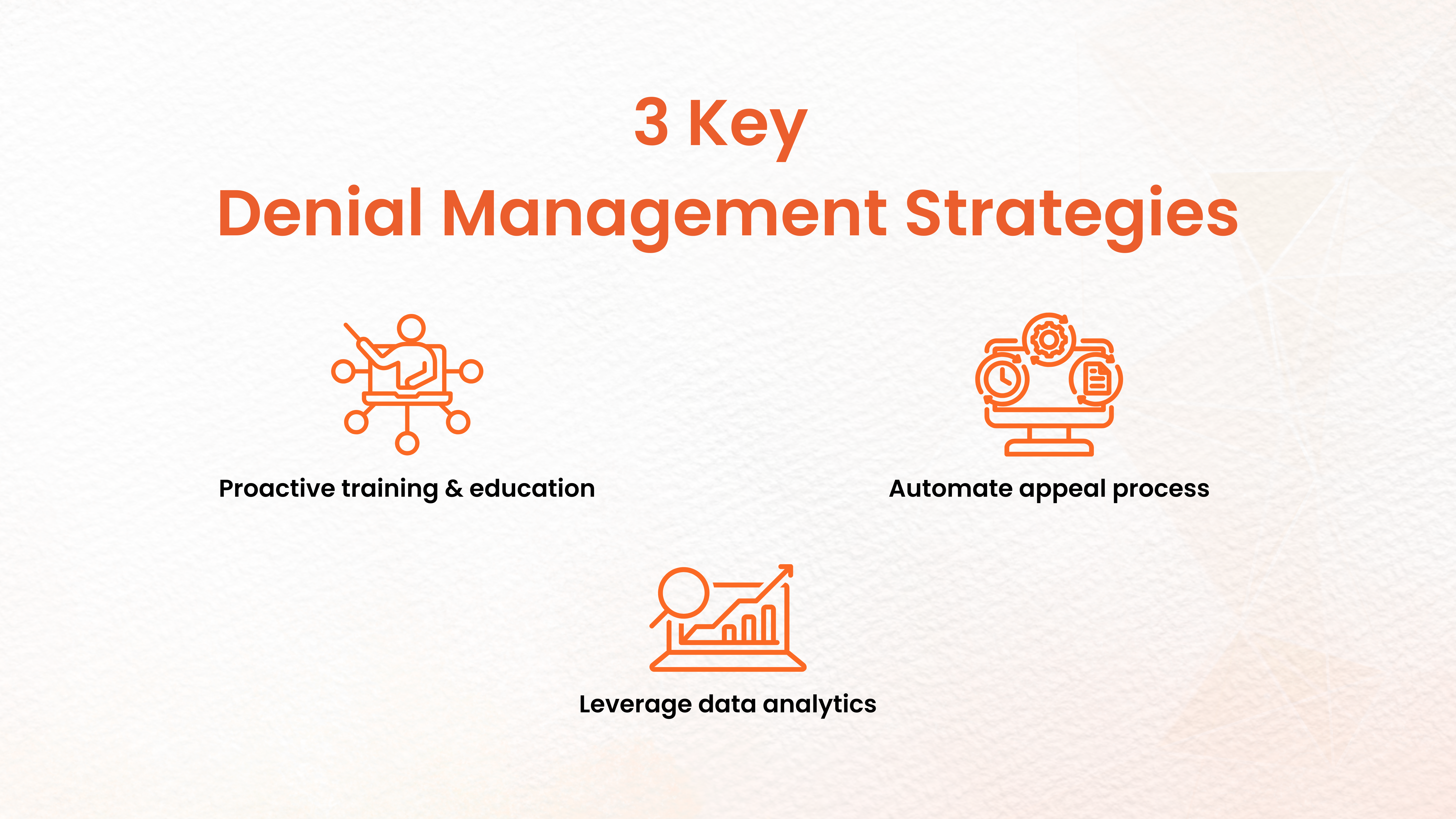
Here are three key strategies hospitals can implement to successfully overcome payer denials:

1. Proactive Healthcare Denial Prevention Through Training and Education
One of the most effective ways to tackle denials is to prevent them from happening in the first place. This requires healthcare organizations to invest in comprehensive training and education for their billing and coding teams. Often, payer denials stem from avoidable errors, such as incorrect coding, incomplete documentation, or failure to follow payer-specific guidelines.
To proactively reduce denials:
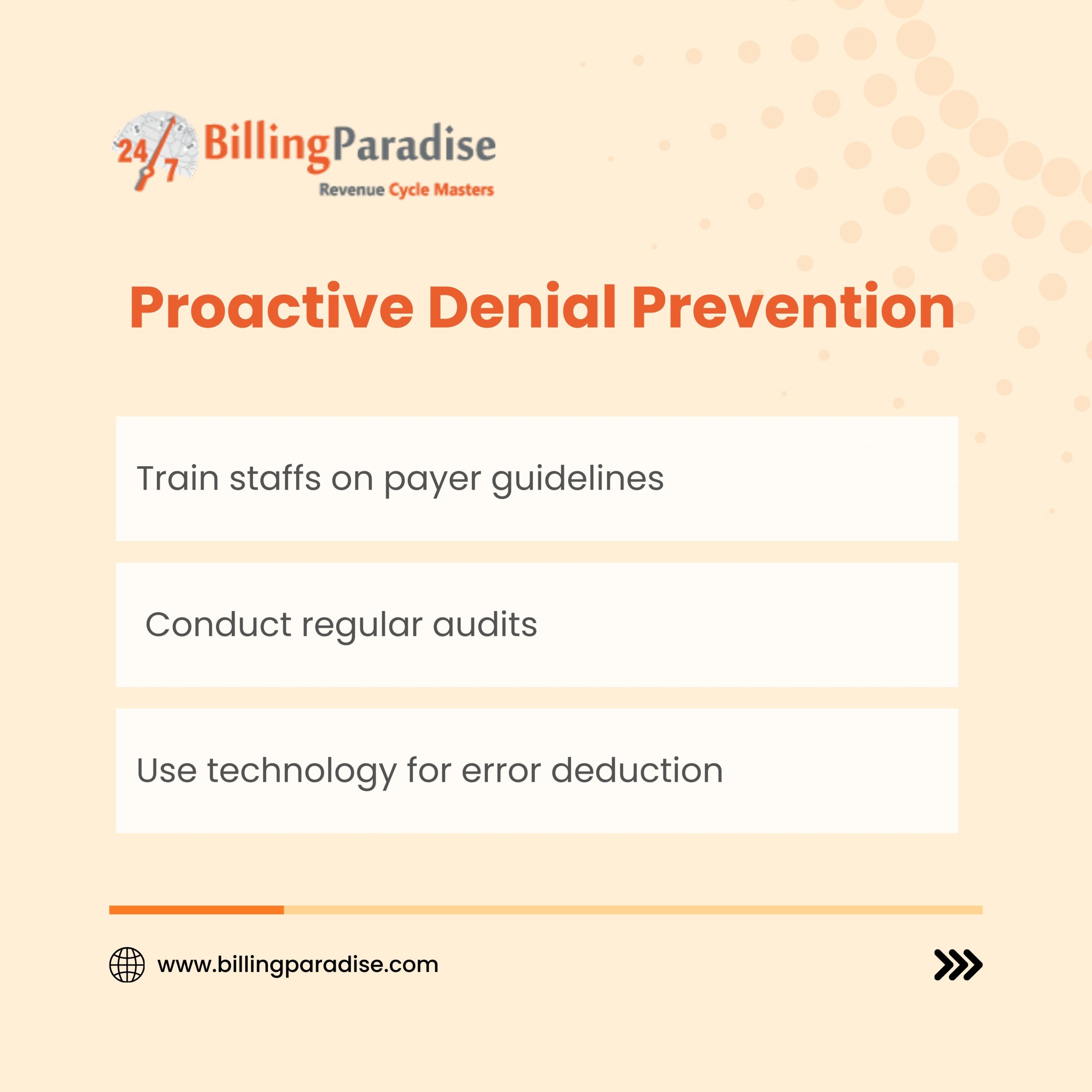
- Training on Payer Guidelines: Educating staff on the specific requirements of each payer can drastically reduce the chance of errors. Payers have different policies regarding documentation, coding, and submission timelines. Keeping staff up-to-date on these evolving requirements is crucial.
- Regular Audits and Feedback Loops: Implementing regular internal audits of billing and coding practices can help identify problem areas before they become recurring issues. Sharing audit results and providing ongoing feedback to staff can reinforce best practices.
- Utilizing Technology for Error Detection: AI-driven tools and automation software can assist by flagging potential issues in real-time before claims are submitted. These technologies can analyze claims data, detect discrepancies, and suggest corrections, improving the accuracy of claim submissions.
By investing in education and leveraging technology, healthcare organizations can build a strong foundation for healthcare denial prevention and minimize avoidable errors.
2. Streamlined Appeal Processes to Address Denied Claims in healthcare
Even with preventive measures, denials are inevitable. Denied claims in healthcare are, the key to success lies in having a streamlined, efficient appeals process in place. A well-organized appeals process is a major step in the healthcare denial prevention strategy and preventing them from becoming a financial drain.
Consider these steps to improve the appeals process:
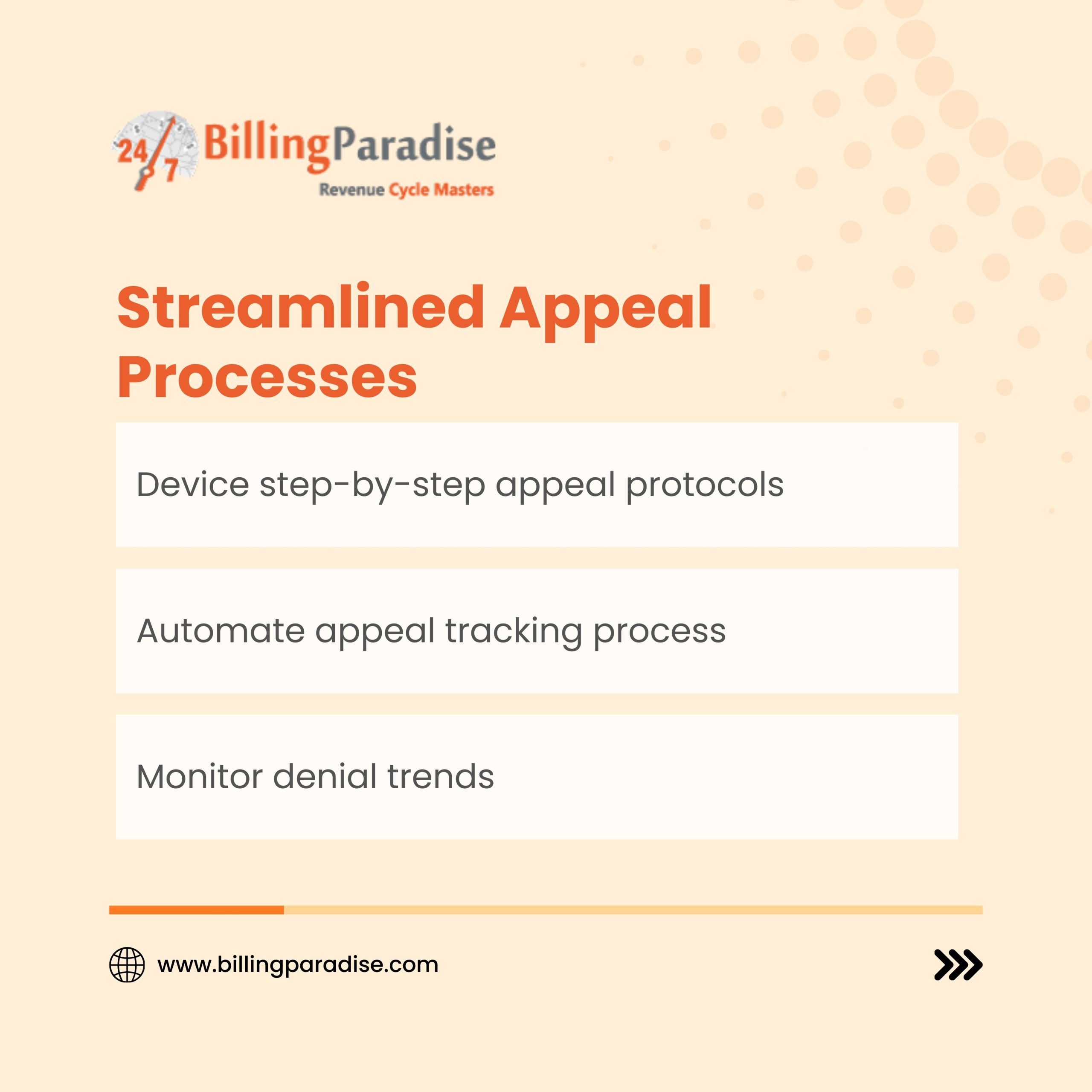
- Standardized Appeal Protocols: Every organization should have clear, step-by-step protocols for handling denied claims in healthcare. This includes designating staff responsible for managing appeals and ensuring that all necessary documentation is gathered promptly.
- Automation in Appeals Management: Denial Management Automation tools can significantly speed up the appeals process. By automatically tracking the status of appeals, generating appropriate appeal letters, and maintaining communication with payers, hospitals can reduce the manual workload involved in appeals and improve their response times.
- Monitoring Denial Trends: It’s critical to monitor trends in denials to understand the root causes and adapt accordingly. For instance, if denials are frequently occurring due to incomplete documentation, hospitals can implement checks to ensure that all required documents are included with the initial submission.
By streamlining the appeals process and analyzing denial trends, providers can resolve denied claims faster. This approach ensures steady revenue flow without unnecessary disruption.
3. Leveraging Data Analytics to Optimize Denial Management
Data is a powerful tool in the fight against payer denials and implement a seamless healthcare denial prevention strategy. By analyzing denial patterns and trends, healthcare providers can identify root causes and implement targeted improvements to reduce rejections.
Here’s how data analytics can play a role in denial management:
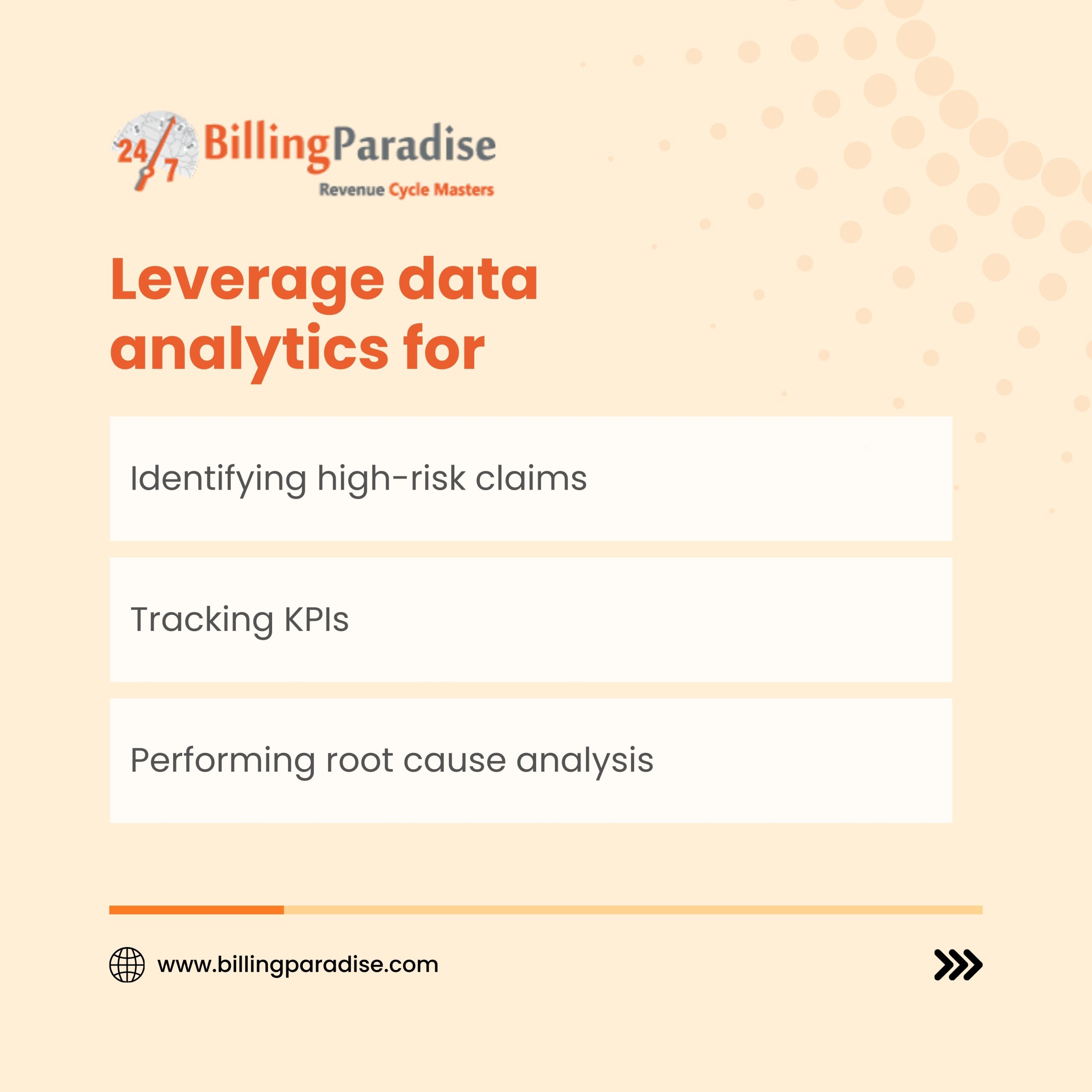
- Identifying High-Risk Claims: Analytics helps healthcare providers identify denial claims more likely to be rejected using historical data insights. By identifying these high-risk claims upfront, hospitals can take extra care in reviewing them before submission.
- Tracking Key Performance Indicators (KPIs): Denial rates, appeal success rates, and average time to resolve denials are essential KPIs that healthcare providers should track. Regular review of these metrics shows how effectively the organization manages denials and identifies areas needing improvement.
- Root Cause Analysis: Analyzing denial data can reveal patterns in the reasons for denials, whether it’s coding issues, missing documentation, or payer-specific quirks. This allows healthcare providers to address the root causes and prevent future denials.
Using data-driven insights enables healthcare organizations to optimize their denial management processes, make informed decisions, and ultimately reduce the volume of denial claims in healthcare.
The Role of Revenue Cycle Management Consultants
Navigating the complexities of payer denials can be a daunting task, even for well-equipped healthcare organizations. That’s why a robust Healthcare denial prevention strategy is needed. This is where revenue cycle management consultants come in. RCM consultants bring specialized expertise and experience to help hospitals improve their denial management processes, optimize revenue cycle performance, and mitigate financial risks.
RCM consultants can assist healthcare providers by:
- Conducting Comprehensive Denial Audits: Consultants can perform in-depth audits of an organization’s claims and denial processes, identifying inefficiencies and areas for improvement.
- Implementing Best Practices: Consultants use industry expertise to recommend and implement best practices tailored to organizational needs, from staff training to technology optimization.
- Providing Ongoing Support: RCM consultants provide ongoing support to ensure denial management strategies adapt to evolving payer policies and healthcare regulations.
By working with a dedicated Healthcare RCM consultant, healthcare providers can gain valuable insights and access tools that improve their overall denial management processes, increase revenue, and reduce administrative burdens.

View the detailed post on LinkedIn
Conclusion: Overcoming Payer Denials with the Right Partner
Payer denials pose a major challenge for hospitals and healthcare providers. However, proactive healthcare denial prevention, streamlined appeals, and data-driven denial management can help organizations turn the tide. Experienced revenue cycle management consultants provide expert guidance and strategic support to help organizations overcome denial management challenges effectively.
BillingParadise is a 20-year-old revenue cycle and healthcare AI and automation company. We provide complete revenue cycle management services, staff support for revenue cycle operations, and RCM AI and automation solutions. BillingParadise offers evidence-based solutions to help healthcare leaders resolve their revenue cycle challenges and achieve optimal financial health.
By implementing the strategies discussed here and partnering with experts like BillingParadise, healthcare organizations can effectively implement healthcare denial prevention strategies to overcome payer denials and ensure the smooth flow of revenue.