In 2026, the medical billing is at a crossroads. Technological innovations, evolving regulations, and shifting patient expectations are reshaping how healthcare providers handle revenue cycle management. While these changes present significant opportunities for efficiency and growth, they also introduce a host of challenges that require healthcare providers to adapt quickly and strategically. About 64% of CFOs surveyed believe it’s too early to tell what impact artificial intelligence will have on their relationships with payers ( HFMA ). So it’s high time for healthcare providers to consider partnering with revenue cycle management consultants to have a streamlined billing process when there are several factors in the play and yet the need to stand tall in their patient satisfaction deliverance.
This blog explores the challenges in medical billing, the trending RCM updates, healthcare providers face, and how revenue cycle management (RCM) consultants can be valuable allies in overcoming these hurdles.

The Evolving State of Medical Billing in 2026
Medical billing processes have undergone a digital transformation over the past decade. The incorporation of technologies such as automation, artificial intelligence (AI), and predictive analytics has made it possible to streamline billing workflows, reduce errors, and accelerate healthcare reimbursements. In 2026, these technologies are no longer optional—they are essential for staying competitive.
Key Innovations Driving Change:
- Automation: Automation tools handle repetitive tasks like claims submission, payment posting, and charge entry. This reduces manual errors and shortens the time between service delivery and payment.
- Artificial Intelligence (AI): AI analyzes large datasets to predict denials, optimize coding, and identify potential compliance issues before they become costly problems.
- Integration of Electronic Health Records (EHRs): Seamless integration between EHR systems and billing software enables accurate data transfer, minimizes discrepancies, and ensures that claims are filed in compliance with payer guidelines.
- Patient-Centric Billing: Advanced billing systems now cater to patients’ expectations for transparency and convenience. Features such as online payment portals and cost estimators have become standard, improving patient satisfaction and payment rates.
While these advancements have made medical billing more efficient, they have also created a more complex challenges in medical billing
Key Healthcare Billing Challenges That Healthcare Providers Face in 2026
Despite technological progress, healthcare providers are grappling with several persistent challenges in medical billing that impact their financial health and operational efficiency.
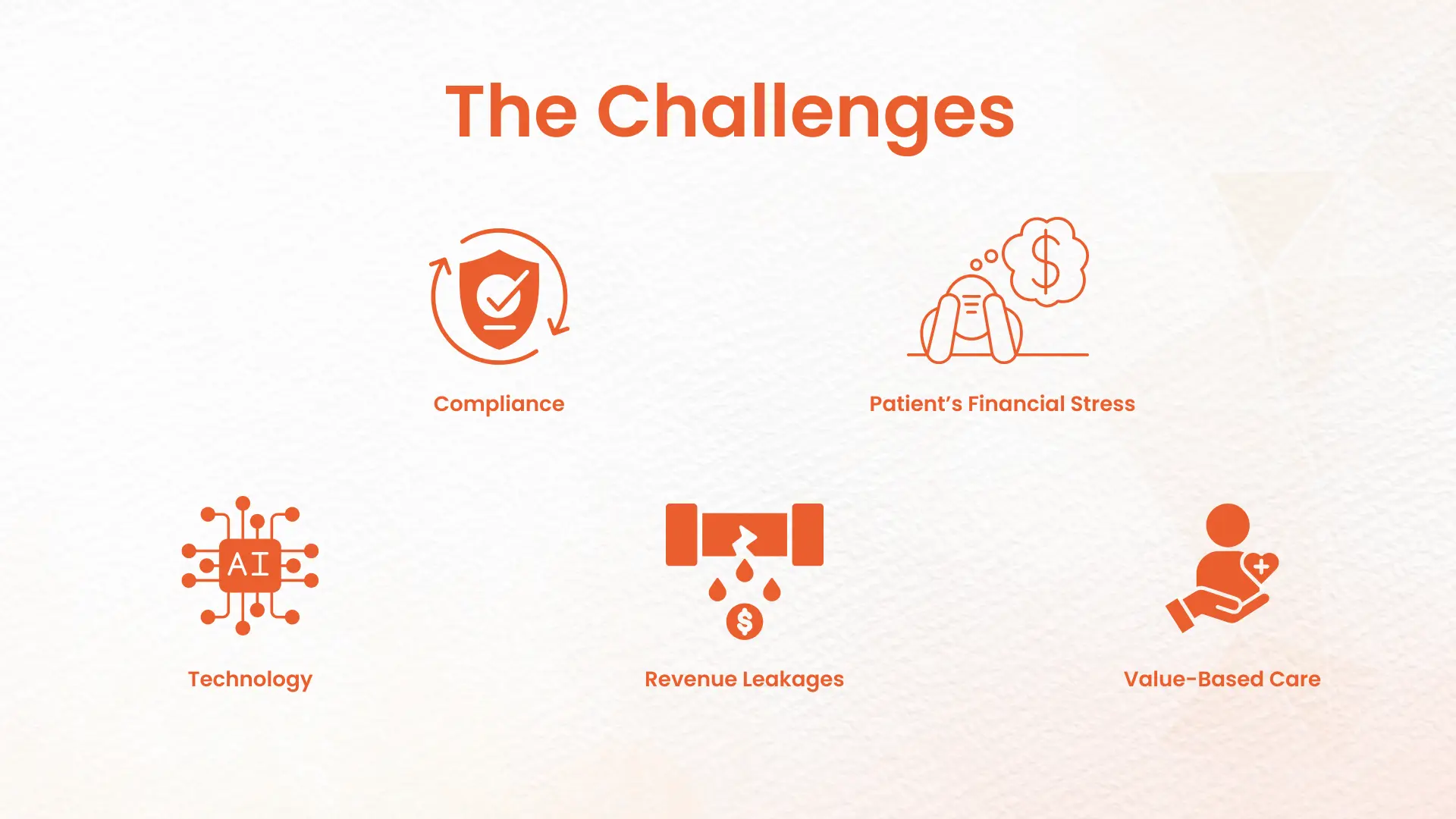
1. Regulatory Compliance and Coding Updates
The regulatory environment in healthcare is ever-changing and keeping up with RCM updates is daunting. In 2026, providers must contend with new updates to coding systems such as ICD-11 and CPT codes, as well as payer-specific rules. Non-compliance with these regulations can result in claim denials, fines, and revenue loss.
To maintain compliance, providers need:
- Regular training for coding and billing teams.
- Advanced software solutions that automatically update coding rules.
- Vigilant monitoring of payer policies.
2. Rising Patient Financial Responsibility
The increasing prevalence of high-deductible health plans has shifted a larger portion of healthcare costs onto patients. Providers are now responsible for collecting a significant percentage of their revenue directly from patients, which introduces new healthcare billing challenges:
- Communicating costs clearly to patients upfront.
- Offering flexible payment plans to improve collections.
- Implementing tools for online payments and real-time cost estimation.
Failure to address these needs can lead to delayed payments, patient dissatisfaction, and financial strain on providers.
3. Technological Integration and Data Security
While technology is a game-changer for medical billing, integrating various systems—such as EHRs, practice management software, and billing platforms—is a daunting task. Interoperability issues can lead to inefficiencies, while the increasing risk of cyberattacks makes data security a top priority. Additionally accustoming to RCM updates on the use of AI and its not-known impact is yet another challenge
In 2026, healthcare providers must:
- Ensure that all systems communicate effectively and exchange data seamlessly.
- Invest in cybersecurity measures to protect sensitive patient information.
- Stay compliant with privacy regulations such as HIPAA and the GDPR.
4. Denial Management and Revenue Leakage
Claims denials remain a major obstacle to revenue cycle efficiency. Common causes include coding errors, missing documentation, and failure to meet payer-specific requirements. Unresolved claims denials representing an average annual loss of $5 million for hospitals representing up to 5 percent of net patient revenue ( Journal of AHIMA ). Left unchecked, denial rates can lead to significant revenue leakage, eroding a provider’s bottom line.
Effective denial management involves:
- Identifying and addressing root causes of denials.
- Implementing robust claims-editing tools.
- Training staff on accurate documentation and coding practices.
5. Transition to Value-Based Care
The shift from fee-for-service models to value-based care requires providers to focus on patient outcomes rather than the volume of services delivered. This transition complicates the existing challenges in medical billing, as reimbursements are tied to metrics such as patient satisfaction and quality of care, alongside adjusting to RCM updates
Providers must invest in:
- Analytics tools to track performance metrics.
- Processes for reporting outcomes to payers.
- Staff education to align operations with value-based payment models.
How Revenue Cycle Management Consultants Help Healthcare Providers
Navigating the healthcare billing challenges and the RCM updates of 2026 requires more than just technology—it demands expertise, strategic planning, and the ability to adapt quickly. This is where revenue cycle management (RCM) consultants come in. These professionals provide the tools and insights needed to optimize billing operations, improve financial performance, and ensure compliance.
Key Contributions of RCM Consultants:
- Workflow Optimization: RCM consultants analyze existing processes, identify inefficiencies, and implement best practices to streamline workflows. This leads to faster claims processing, fewer errors, and improved cash flow.
- Regulatory Guidance: Keeping up with regulatory changes is no small task. RCM consultants offer up-to-date knowledge and tailored solutions to help providers remain compliant with coding updates, payer policies, and government regulations.
- Technology Integration: Selecting and implementing the right technology is critical for success. RCM consultants assist with choosing medical billing services platforms, integrating systems, and ensuring that technology investments deliver maximum ROI.
- Denial Prevention and Recovery: With a deep understanding of denial patterns, consultants develop targeted strategies to reduce denials and recover lost revenue. This includes implementing predictive analytics to identify potential issues before claims are submitted.
- Patient Engagement Strategies: Enhancing the patient’s financial experience is vital in today’s healthcare landscape. RCM consultants help providers design transparent billing processes, offer flexible payment options, and improve communication with patients about their financial responsibilities.
BillingParadise: Your Partner in Revenue Cycle Success
As a healthcare provider, you need an experienced partner to navigate the challenges in medical billing in 2026. BillingParadise, a 20-year-old revenue cycle and healthcare AI and automation medical billing company, offers comprehensive solutions tailored to the unique needs of healthcare organizations.
Why Choose BillingParadise?
- Comprehensive Revenue Cycle Management Services BillingParadise manages the entire revenue cycle, from patient registration to final payment, ensuring accuracy and efficiency at every stage.
- Expert Staff Support Our team of skilled professionals integrates seamlessly with your operations, providing the expertise and support needed to overcome challenges and drive results.
- AI and Automation Solutions Leveraging cutting-edge AI and automation technologies, we streamline billing processes, reduce errors, and accelerate reimbursement cycles.
- Evidence-Based Solutions At BillingParadise, we deliver data-driven insights and evidence-based strategies to help healthcare leaders resolve their most pressing healthcare billing challenges.
By partnering with BillingParadise, you gain access to a trusted advisor that is committed to your success. Our solutions empower you to overcome obstacles, optimize your revenue cycle, and focus on what matters most—delivering exceptional patient care.



View the detailed post on LinkedIn
Conclusion
The state of medical billing in 2026 is defined by rapid technological evolution, complex regulations, and changing patient expectations. While these trends present significant healthcare billing challenges, they also offer opportunities for providers to improve efficiency and financial performance. By addressing key issues such as regulatory compliance, patient financial responsibility, and denial management, healthcare providers can position themselves for success.
Revenue cycle management consultants, like those at BillingParadise, play a vital role in helping providers navigate these challenges. With over 20 years of experience, BillingParadise delivers tailored solutions that leverage AI, automation, and evidence-based practices to optimize revenue cycles and drive results.
In 2026 and beyond, healthcare providers can thrive by embracing innovation, staying proactive, and partnering with trusted RCM experts like BillingParadise.