The Human Element in hospital denial management strategies
As a healthcare provider, Dealing with healthcare denials is one of the toughest challenges in revenue cycle management. healthcare denials not only affect your organization’s financial stability but also hinder your ability to provide quality care to patients. According to the American Medical Association, up to 20% of claims are denied or delayed, significantly affecting both cash flow and patient care quality.
The growing complexity of healthcare claims necessitates a proactive strategy, skilled personnel, and effective technologies for successful hospital denial management in your practice. In this blog, we will discuss practical strategies for managing healthcare denials to enhance revenue integrity and minimize financial losses.
You are likely dealing with a considerable number of healthcare denials, with the average rate sitting between 5% and 10% of total claims. This issue has persisted since the rollout of 835 Electronic Remittance Advice files in 2003. ( Centers for Medicare & Medicaid Services ) These statistics highlight the necessity for a range of expertise—spanning registration, coding, billing, and clinical fields—to thoroughly analyze, pinpoint, and tackle the underlying causes of your healthcare denials.
Nonetheless, locating and keeping the right staff for these positions can be quite difficult. Healthcare denials often stem from intricate issues, and the specialized knowledge needed to manage these claims effectively is not easy to find. The rising expectations from payers and the growing obstacles to preventing healthcare denials further complicate the situation.
Leveraging Technology to Reduce Healthcare Denials
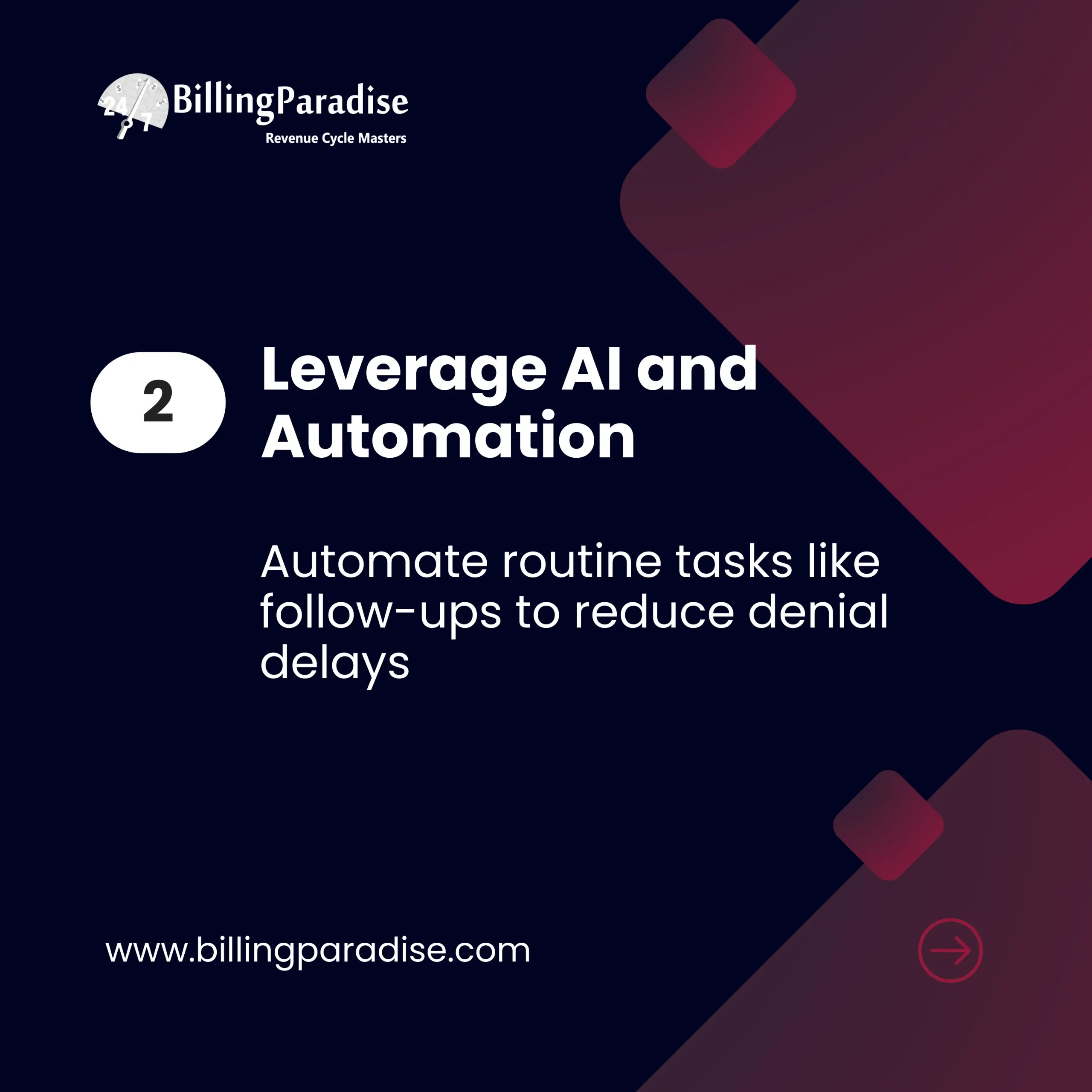
Technology has become an essential tool in minimizing claim healthcare denials. The process begins even before the patient visit, helping to identify and tackle common triggers for healthcare denials. Automation can verify patient eligibility, check the necessity for prior authorization, and assess whether claims might be rejected due to medical necessity. By automating these tasks, healthcare providers can prevent healthcare denials upfront without requiring intake staff to have a comprehensive understanding of all denial scenarios.
For instance, a robust patient intake tool can flag potential issues through quality edits, enabling staff to resolve them smoothly before they escalate into healthcare denials. Hospital denial management technologies also enhance your analytics process by analyzing data from 835 EDI files, categorizing healthcare denials, and pinpointing their likely sources.
Most technologies available today can process standard electronic data files from payers and deliver valuable insights into the reasons behind healthcare denials. These insights can help classify issues—whether they stem from registration errors, coding problems, or billing discrepancies—allowing providers to address them effectively. However, despite these advancements, technology cannot replace the crucial step of root cause analysis, which often necessitates manual intervention and a thorough understanding of the denial scenario.
Skilled Staff: The Human Element in hospital denial management strategies
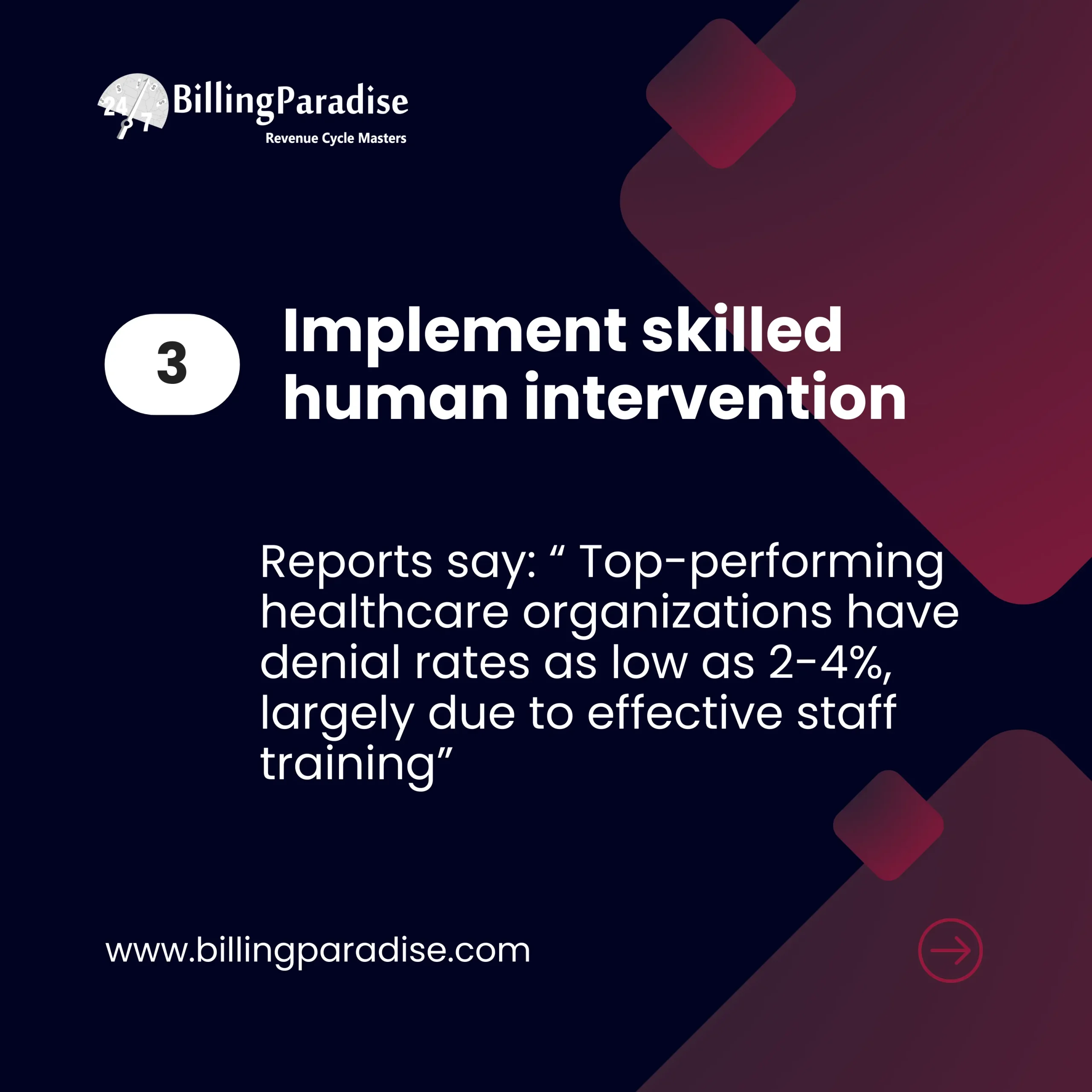
According to the Medical Group Management Association (MGMA), around 11% of the top-performing healthcare organizations have lowered their denial rates. This is largely due to effective staff training and comprehensive hospital denial management processes.
While technology plays a vital role in modern hospital denial management, the importance of your skilled staff cannot be overlooked. Healthcare denials can arise from various points within an organization—be it materials management, clinical documentation, or coding. Therefore, a hospital denial management team should comprise individuals from diverse disciplines, including registration, billing, coding, and clinical integration.
Having a senior leader with expertise across these areas is essential to guide the team and facilitate informed decision-making. This leader should be capable of pinpointing the root cause of a denial, identifying preventive measures, and crafting solutions to avoid future occurrences. Consistency is also crucial—utilizing denial templates, following a defined process, and ensuring thorough documentation aids in understanding the downstream impacts of any workflow changes.
A robust Electronic Medical Record (EMR) system that merges clinical and financial data can enhance this process, but it demands careful oversight. Even minor adjustments in one section of the system can trigger a ripple effect, potentially leading to new healthcare denials in other areas. A well-defined process is vital for monitoring these impacts and making necessary modifications.

Characteristics of a Successful Hospital Denial Management Strategies
Effective hospital denial management strategies share several key characteristics that distinguish them from others, and you can implement these features to enhance your outcomes. Primarily, they utilize technology to produce data and analytics that guide decision-making. This enables providers to prioritize healthcare denials based on their potential impact on compliance or revenue, allowing them to concentrate their efforts where they will be most beneficial.
However, technology alone isn’t sufficient. A knowledgeable, consistent, and driven hospital denial management team is crucial as well. Having a clear process and denial templates helps the team monitor the effects of changes and track progress. Successful hospital denial management strategies also foster a culture of continuous improvement. They collect insights from denial cases, use this information to refine their systems and modify workflows based on actual results.
Healthcare AI and automation provide evidence-based solutions to assist healthcare leaders in tackling these challenges. We offer a full range of revenue cycle management services, including RCM staff support and AI-driven automation solutions. Our strength lies in helping healthcare providers identify gaps, prevent healthcare denials, and streamline revenue cycle processes.
Using Analytics to Drive hospital denial management
A crucial tool in managing healthcare denials is analytics. It allows for a clear visualization of the entire denial process, helping to pinpoint where healthcare denials are coming from and enabling the creation of actionable steps to tackle them. Without analytics, managing healthcare denials can feel like a trial-and-error process, making it difficult for teams to identify the real causes behind the healthcare denials.
Hospital denial management technologies that analyze EDI files serve as the initial step in understanding healthcare denials. However, conducting a thorough root cause analysis still requires manual effort, relying on a combination of skilled personnel and experience. For healthcare organizations, implementing an analytics system means they can identify which healthcare denials have the most significant impact on revenue or compliance and develop targeted strategies to address them.
By effectively utilizing analytics, you can detect trends in healthcare denials, establish feedback loops for ongoing improvement, and prioritize efforts to enhance financial outcomes. Additionally, analytics contributes to preventive strategies. By examining past denial trends, providers can devise plans to avoid similar issues in the future.

Creating a Culture of Denial Prevention
A successful hospital denial management strategy goes beyond just addressing healthcare denials as they happen; it focuses on preventing them from occurring in the first place. This prevention begins with a deep understanding of the underlying causes and a proactive strategy to tackle them before they result in healthcare denials. Key elements of this approach include staff training, proper documentation, and effective workflow design.
For example, healthcare providers should think about investing in training initiatives aimed at enhancing the quality and accuracy of documentation. When staff members are well-versed in payer requirements and can accurately document patient interactions, many potential healthcare denials can be sidestepped. Furthermore, utilizing denial templates and following a systematic hospital denial management process can greatly lower the frequency of recurring healthcare denials.
Automation tools are also essential in this preventive strategy. By automating processes such as eligibility verification, prior authorization, and claims submission, healthcare providers can minimize the chances of human error, which is a major contributor to healthcare denials. BillingParadise offers comprehensive revenue cycle management solutions that feature automated tools designed to assist healthcare providers in preventing healthcare denials and ensuring a smooth claims process.
Measuring Success in Hospital Denial Management
A key feature of an effective hospital denial management strategy is the ability to assess its success. Important metrics include the denial rate, the percentage of overturned healthcare denials, and the time required to resolve a denial. Consistently tracking these metrics is essential for refining your strategy.
Additionally, celebrating achievements and rewarding staff for reaching targets is vital for a successful program. When teams receive recognition for their hard work in minimizing healthcare denials and enhancing revenue, it fosters a positive cycle that drives further success. Cultivating a culture that prioritizes continuous improvement, acknowledges progress, and learns from challenges will lead to excellence in hospital denial management.


View the detailed post on LinkedIn
Conclusion
Hospital denial management is a crucial aspect of revenue cycle management for healthcare providers, though it can be quite complex. It involves a blend of technology, skilled personnel, consistent processes, and a commitment to ongoing improvement. By utilizing technology to automate routine tasks, employing analytics for informed decision-making, and investing in talented staff, you can establish a hospital denial management program that not only tackles existing healthcare denials but also works to prevent future ones.
At BillingParadise, we recognize the difficulties healthcare providers encounter when managing healthcare denials. With more than 20 years of experience in revenue cycle management, AI, and automation, we offer solutions tailored to assist healthcare leaders in overcoming these obstacles. Our evidence-based approach aims to help providers minimize healthcare denials, enhance financial performance, and ensure high-quality patient care.
If you are in search of comprehensive revenue cycle management services, support for RCM operations, or AI-driven automation solutions, consider collaborating with BillingParadise. Together, we can develop a more efficient and effective hospital denial management strategy that enables your organization to flourish.