

Hospital Accounts receivable (AR) management remains a pressing issue for community health hospitals, directly impacting financial stability and operational efficiency. Reportedly 84% of Healthcare Organizations Report Financial Losses Due to Outdated AR Processes PYMNTS . As we approach 2025, the landscape is set to become even more challenging with evolving payer policies, increased patient financial responsibility, and rising costs of care. However, advancements in automation and the expertise of revenue cycle management (RCM) consultants provide a path forward. This blog unpacks the key Hospital AR challenges and explores actionable strategies for overcoming them.
The Growing Complexity of Hospital AR in Community Health

Community health hospitals play a vital role in delivering care to underserved populations. However, community hospital AR challenges pose a unique financial threat. Comprehensive studies reveal that, after 120 days in accounts receivable, healthcare providers can expect to receive only ten cents for every dollar owed Hansei Solutions
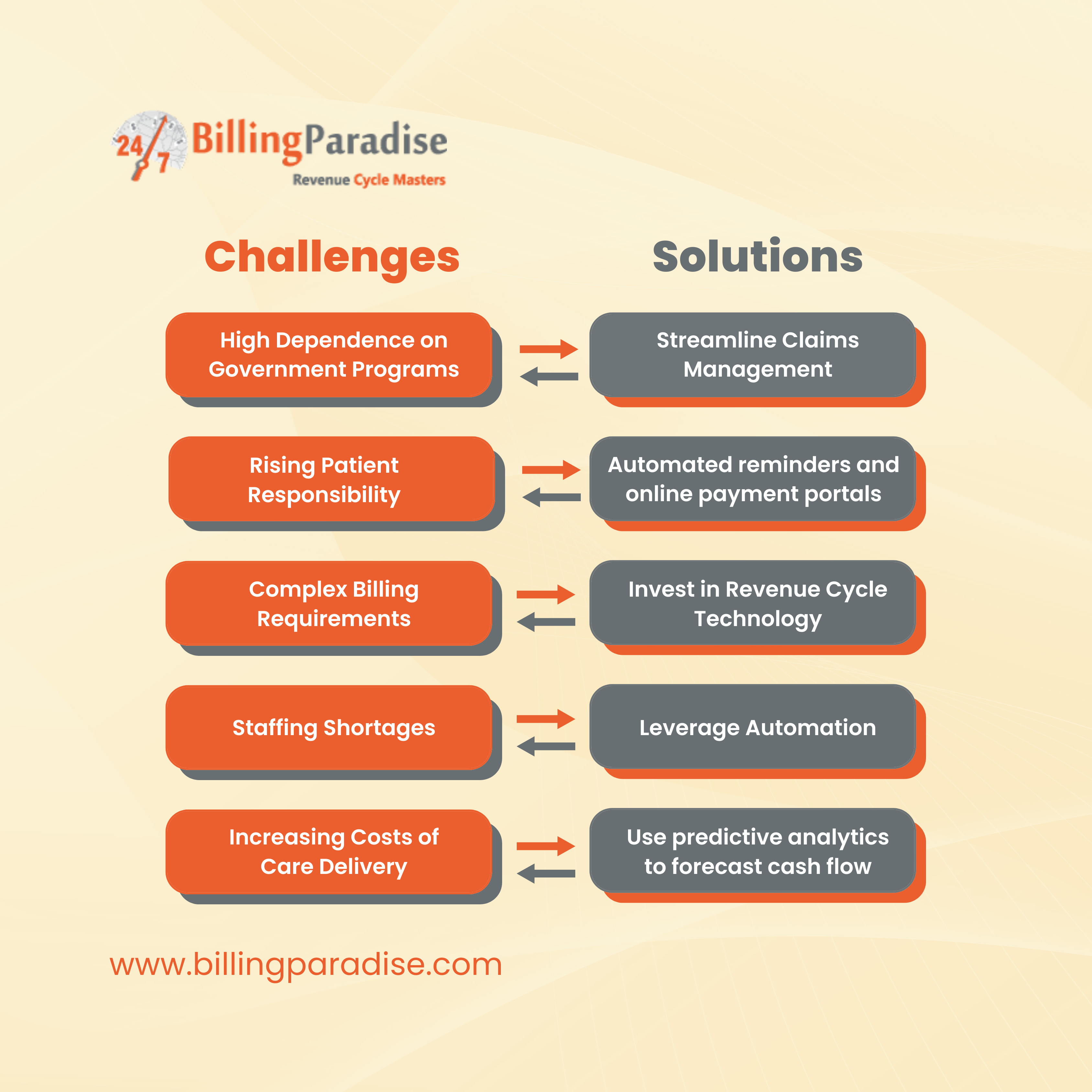
1. High Dependence on Government Programs: With a large portion of their revenue tied to Medicaid and Medicare, delayed reimbursements or denied claims can strain cash flow. The complexity of navigating government requirements often leads to administrative backlogs.
2. Rising Patient Responsibility: As high-deductible health plans become the norm, hospitals must navigate collecting larger sums directly from patients—a process fraught with delays and increased bad debt. Patients often lack clarity on their financial obligations, further complicating collections.
3. Complex Billing Requirements: The administrative burden of meeting payers’ documentation and coding demands often leads to claim rejections and prolonged AR cycles. This complexity is exacerbated by frequent policy changes that require constant adaptation.
4. Staffing Shortages: Many community health facilities operate with limited staff, making it harder to manage AR efficiently. Staff burnout further compounds the issue, leading to errors and inefficiencies in billing and collections.
5. Increasing Costs of Care Delivery: Rising operational costs—from labor to technology investments—leave little room for financial setbacks. Delayed reimbursements exacerbate financial strain, jeopardizing the quality of care.
Automation: A Game-Changer for Hospital AR Management
Automation has revolutionized industries, and healthcare is no exception. By implementing automated solutions, Community hospital AR challenges can be dealt with
1. Streamline Claims Management
Automated systems can identify errors in claims before submission, reducing rejections and denials. Tools powered by artificial intelligence (AI) also enable real-time eligibility verification with tools such as patient eligibility verification AI, ensuring that claims meet payer requirements from the outset. For example, AI can flag incomplete documentation or highlight discrepancies in coding before claims are sent to payers.
2. Enhance Patient Payment Collections
Automated reminders and online payment portals simplify the collection process. Hospitals can provide patients with flexible payment plans, reducing financial stress and boosting recovery rates. By integrating text message reminders and secure payment links, hospitals can make the payment process more convenient for patients.
3. Accelerate AR Follow-Ups
Automation tools prioritize high-value accounts and send timely reminders to payers, significantly cutting down follow-up times. This ensures quicker payment resolutions and improved cash flow. Automated workflows can also track payer-specific deadlines and escalate cases when necessary.
4. Generate Actionable Insights
Dashboards powered by automation provide real-time Hospital AR performance metrics, enabling leadership to identify bottlenecks and optimize processes effectively. These insights help organizations predict trends, allocate resources, and refine strategies for maximum efficiency.
Key Strategies to Address Hospital AR Challenges in 2025
1. Adopt Advanced RCM Technologies
Investing in AI-powered RCM platforms is crucial. These systems automate repetitive tasks like claims scrubbing, payment posting, and denial management while offering predictive analytics to preempt future challenges. Advanced RCM tools can also integrate seamlessly with existing EHR systems, minimizing disruption during implementation.
2. Focus on Staff Enablement
While automation is transformative, it must work alongside skilled staff. Providing ongoing training and access to user-friendly tools empowers employees to handle complex cases more efficiently. Cross-training staff to manage multiple aspects of the revenue cycle ensures operational continuity during shortages.
3. Foster Collaboration with Payers
Building stronger relationships with payers can lead to quicker resolution of disputes. Automated systems that track contract compliance and flag discrepancies help ensure fair reimbursements. Regular communication with payers about common denial reasons can also reduce errors and improve approval rates.
4. Optimize Patient Engagement
Transparent communication with patients about costs and payment options is vital. Automated cost estimators and personalized billing portals enhance trust and facilitate faster payments. Hospitals can also offer financial counseling services to help patients understand their obligations and explore payment assistance programs.
5. Leverage RCM Consultants
Partnering with experienced RCM consultants offers solutions to Community hospital AR challenges. Consultants bring industry expertise and provide hands-on support for implementing cutting-edge solutions. They also offer an objective perspective, identifying inefficiencies that internal teams might overlook.
Overcoming Common Automation Barriers
Despite its benefits, automation adoption often faces resistance. Here’s how Community hospital AR challenges can be dealt with
- Cost Concerns: Highlight the long-term ROI of automation, such as reduced claim denials, improved cash flow, and lower administrative costs. Demonstrating success stories from peer institutions can also alleviate concerns.
- Staff Resistance: Involve staff in the selection and implementation of automation tools to ensure buy-in. Offering training sessions and demonstrating how automation can reduce workload helps build trust.
- Integration Challenges: Partner with vendors experienced in seamless EHR and RCM system integrations. Conducting thorough testing and providing technical support during the transition ensures a smoother implementation.
- Data Security Concerns: Address apprehensions about data breaches by selecting automation tools with robust security measures. Ensuring compliance with HIPAA and other regulations is essential for maintaining patient trust.

The Role of BillingParadise in Solving Hospital AR Challenges
For handling Community hospital AR challenges, partnering with a trusted RCM provider like BillingParadise can make all the difference. BillingParadise is a 20-year-old revenue cycle and healthcare AI and automation company. We provide complete revenue cycle management services, staff support for revenue cycle operations, and RCM AI and automation solutions.
Our evidence-based solutions for handling AR Challenges with AR Analyzer empower healthcare leaders to tackle AR challenges head-on. Whether it’s implementing automation, training staff, or providing actionable insights, BillingParadise offers comprehensive support to ensure financial sustainability and operational efficiency.

View detailed posts on Linkedin
The Road Ahead for Hospital AR Management in Community Health
As healthcare continues to evolve, community health hospitals must adapt to new challenges in Hospital AR management. The integration of AI-driven automation, combined with strategic partnerships and a focus on patient-centric billing practices, will be essential for staying ahead. Proactively addressing payer policies, leveraging predictive analytics, and creating transparent patient engagement models can redefine how hospitals approach revenue cycles.
By embracing these strategies and utilizing expert guidance from industry leaders like BillingParadise, community health hospitals can achieve greater financial stability, streamline operations, and continue providing critical care to underserved populations. The future of Hospital AR management lies in innovation, collaboration, and a commitment to excellence.





 management remains a pressing issue for community health hospitals, directly impacting&source=https://www.billingparadise.com/blog/wp-content/uploads/2025/01/Community-Medical-Centers-Can-Lower-Denials-Rates-with-AI-Powered-Solutions-2-1-scaled.webp)

