The recent CMS guidance ( Centers for Medicare and Medicaid Services) (CMS) are aimed at rural hospitals that are interested in participating in Medicare and Medicaid as Rural Emergency Hospitals (Rural Emergency Hospitals). This CMS guidance is a crucial step in helping struggling rural hospitals stay open, maintain critical services, and continue providing care to underserved communities. If your rural hospital is considering conversion to a Rural Emergency Hospital (Rural Emergency Hospital), here’s what you need to do to make it happen.
Why Rural Hospitals Need to Pay Attention to This CMS Guidance to be rural emergency hospital
Many rural hospitals across the U.S. have struggled to stay afloat in recent years. According to a 2024 report from Chartis, over 400 rural hospitals are currently vulnerable to closure, and 55% of independent rural hospitals are operating at a loss. These financial pressures are forcing many rural healthcare providers to consider new ways to remain sustainable, continue delivering essential services, and meet the needs of their communities. The new CMS guidance could provide a lifeline for rural hospitals to improve their Medicare reimbursements under a new designation—the Rural Emergency Hospital.
The Consolidated Appropriations Act of 2021 established the Rural Emergency Hospital designation, creating a new provider type to promote health equity and prevent rural hospital closures. The Rural Emergency Hospital model allows hospitals to maintain essential services while avoiding the heavy financial burden of full inpatient services. This is a critical opportunity to keep healthcare services in rural communities that would otherwise face significant gaps in care.
What Are Rural Emergency Hospitals?
Rural Emergency Hospitals are a new provider designation introduced to help rural healthcare facilities remain operational by focusing on emergency and outpatient services. Eligible hospitals can apply to convert to a Rural Emergency Hospital and take advantage of a simplified operating model that reduces overhead and helps them stay viable. This conversion could make all the difference for hospitals struggling with operational costs and low patient volumes.
One of the primary benefits of becoming a Rural Emergency Hospital is increased Medicare reimbursement. Medicare pays Rural Emergency Hospitals an additional 5% above the Hospital Outpatient Prospective Payment System (OPPS) rate for providing Rural Emergency Hospital services to Medicare patients. This higher reimbursement can go a long way toward improving the financial outlook for rural hospitals that have experienced consistent losses.
CMS Guidance: Key Conditions of Participation and Conversion Process
The recent CMS guidance details the conditions that eligible hospitals must meet to become Rural Emergency Hospitals. This includes participation requirements, the application process, and specific standards that hospitals must adhere to once they have converted.
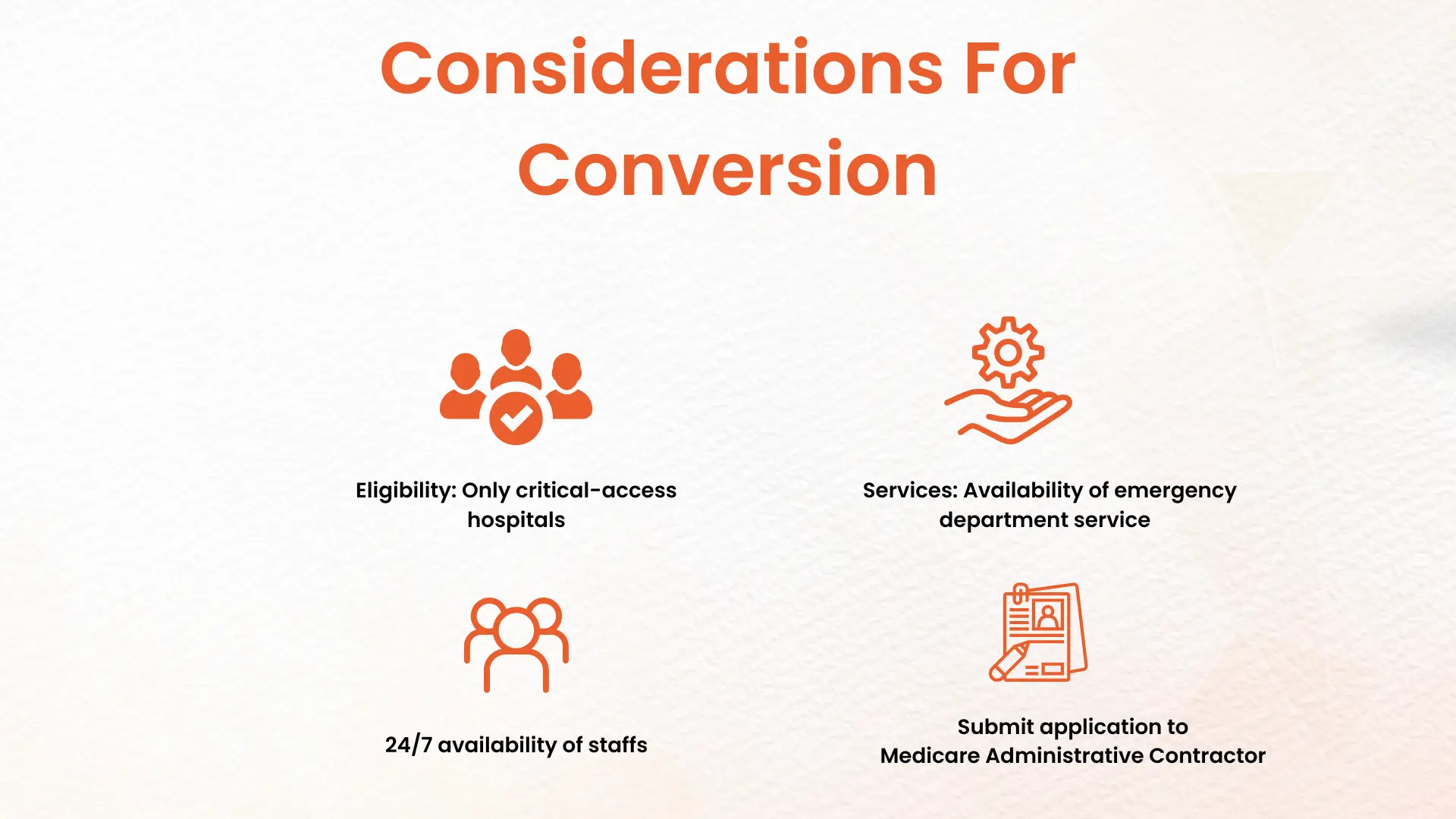
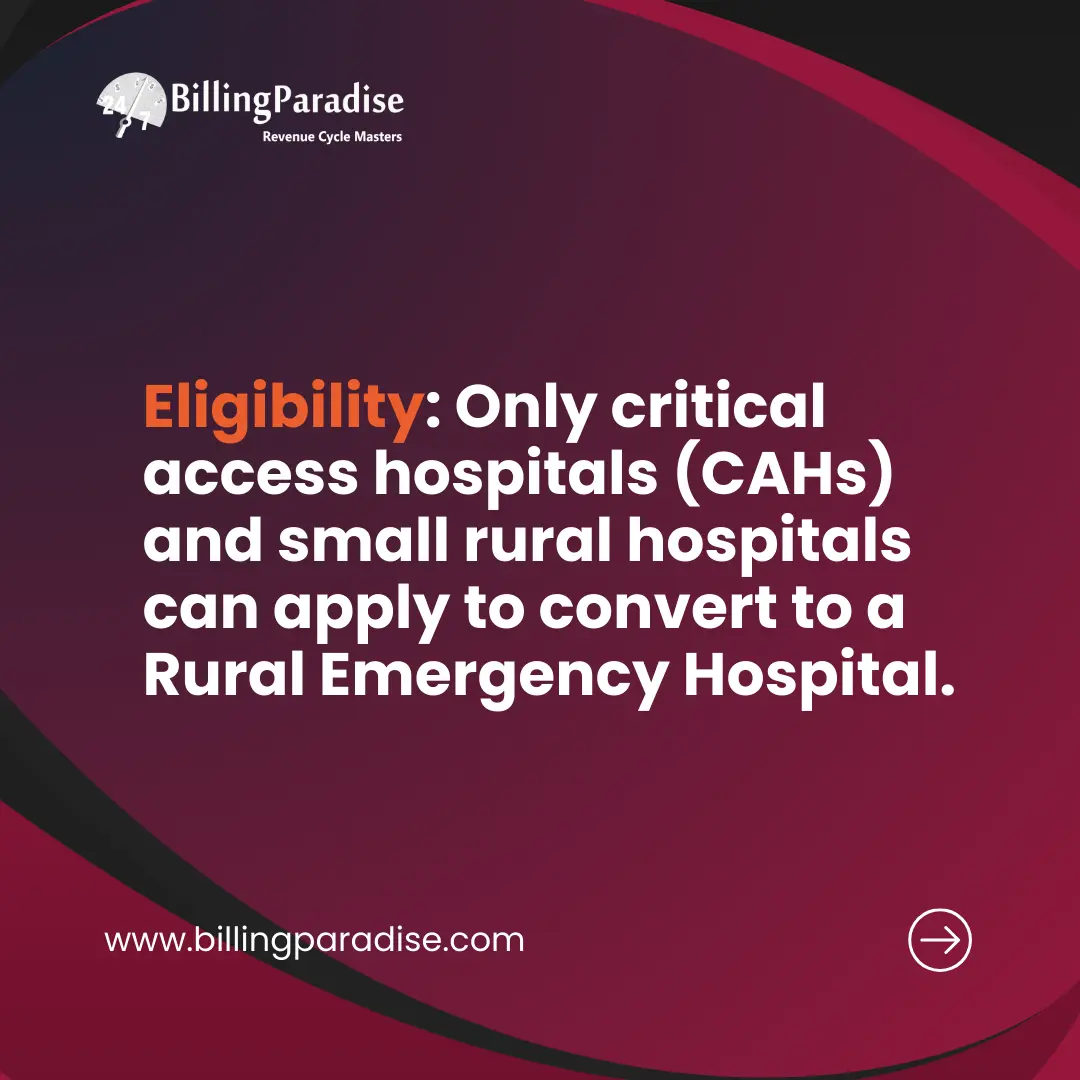
- Eligibility: Only critical access hospitals (CAHs) and small rural hospitals can apply to convert to a Rural Emergency Hospital. The eligibility criteria focus on facilities that need the most support in maintaining services.
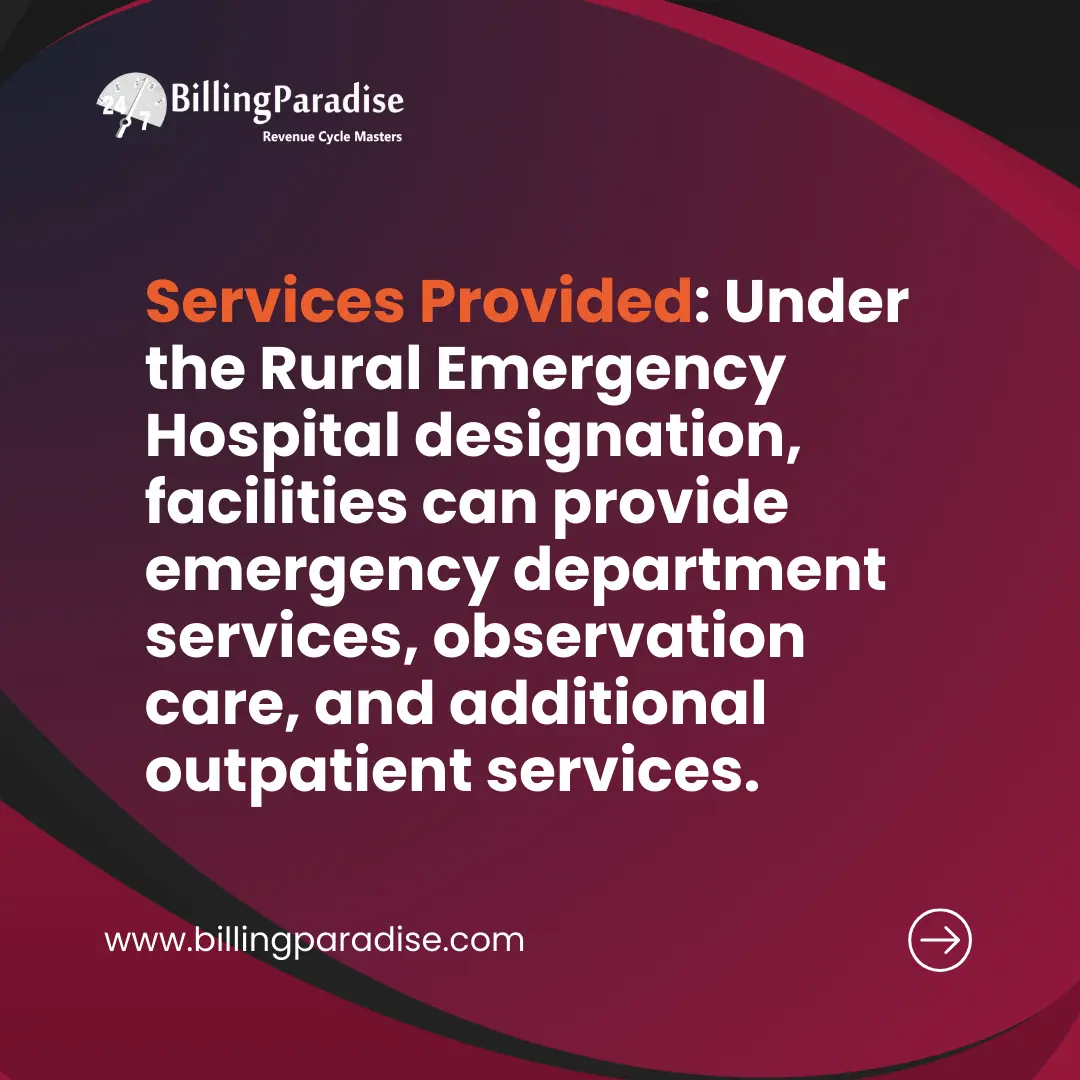
- Services Provided: Under the Rural Emergency Hospital designation, facilities can provide emergency department services, observation care, and additional outpatient services. However, these services must not exceed a 24-hour annual per-patient average length of stay. Rural Emergency Hospitals cannot provide inpatient services, except in distinct parts of the facility licensed as a skilled nursing facility (SNF) for post-hospital extended care services.
- Staffing and Agreements: Rural Emergency Hospitals must maintain a staffed emergency department 24/7 and have a transfer agreement in effect with a Medicare-certified Level I or Level II trauma center to ensure patients receive timely care beyond the scope of the Rural Emergency Hospital’s capabilities.
- Application Process: Hospitals interested in converting to a Rural Emergency Hospital need to submit an application to their Medicare Administrative Contractor (MAC). Additionally, CMS recommends utilizing the Health Resources and Services Administration (HRSA) Rural Emergency Hospital Technical Assistance Center to determine if the Rural Emergency Hospital model is suitable for their community.
The Potential Impact of the Rural Emergency Hospital Designation
Furthermore, the REH designation eases operational burdens for small facilities by focusing exclusively on emergency and outpatient care services. Consequently, rural hospitals reduce maintenance costs for inpatient capabilities while still providing essential healthcare services to their local communities.
Historically, many rural hospitals have struggled to maintain profitability due to lower patient volumes, high operating costs, and limited reimbursements. Specifically, converting to a Rural Emergency Hospital increases Medicare reimbursements and reduces overhead, while providing flexibility for essential patient services. Furthermore, this designation ensures rural communities retain emergency access, serving as a critical lifeline for residents far from urban centers.
Targeted sectors for an optimized conversion process
Transitioning to a Rural Emergency Hospital designation is no small task. It involves not only regulatory and compliance changes but also significant shifts in how a hospital handles its revenue cycle. If your hospital is planning to transition to a Rural Emergency Hospital, here’s what you need to focus on:
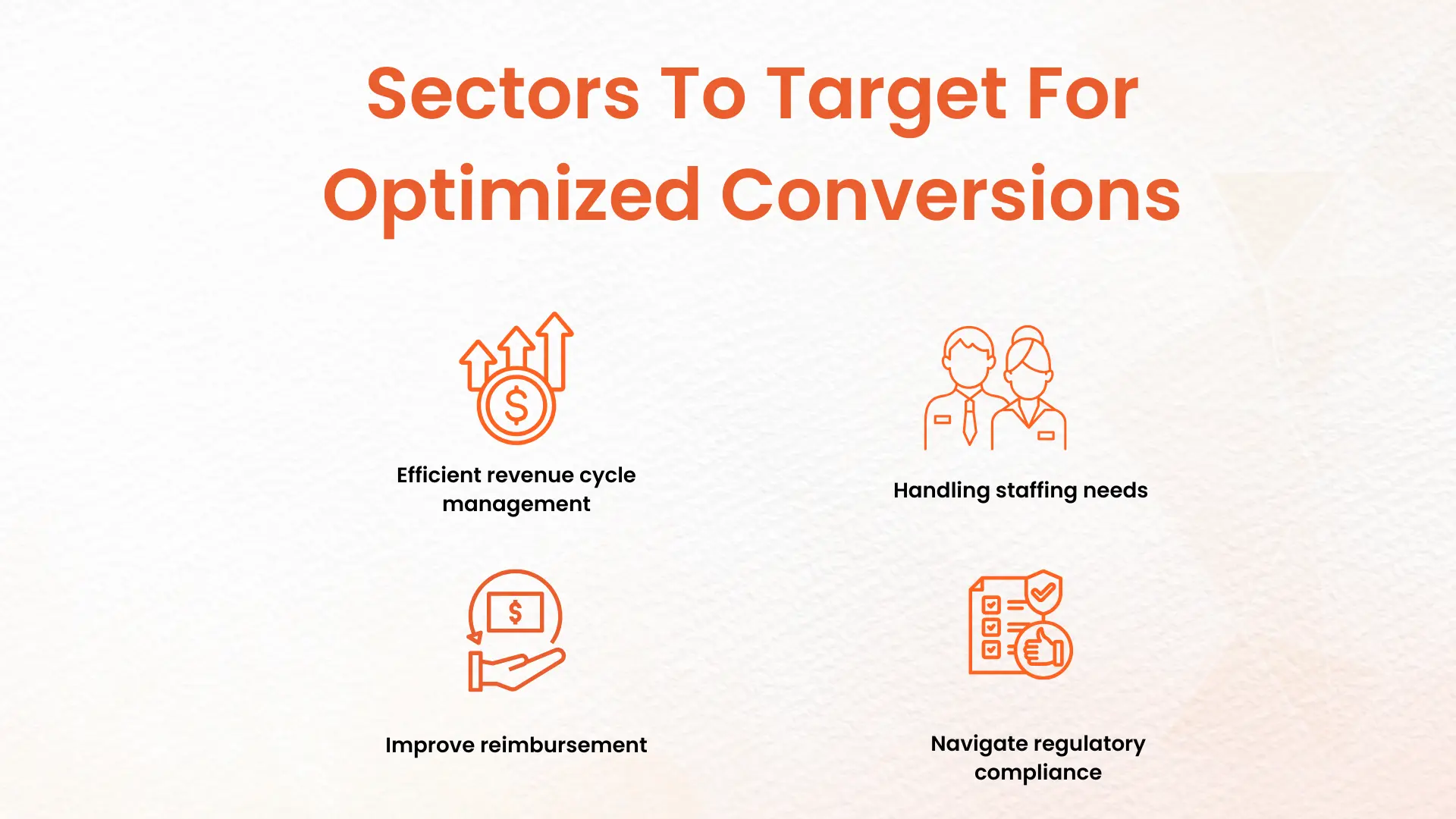
- Optimize Revenue Cycle Operations: Converting to a Rural Emergency Hospital requires hospitals to change their service mix and billing processes, which can be complex. Our experienced team can help optimize your revenue cycle to ensure a smooth transition with minimal disruption to cash flow.
- Handle Staffing Needs: Many rural hospitals face challenges related to revenue cycle staffing—particularly during periods of operational change. Having prominent coding staff support across administration to fill any gaps, allows your team to focus on patient care Implement AI and Automation Solutions: The AI-driven revenue cycle management solutions are designed to reduce manual processes, prevent billing errors, and ensure compliance during and after your conversion. Automation can help make the transition process smoother and ensure your hospital continues to thrive financially.
- Improve Reimbursement: Specifically, the REH designation offers a 5% Medicare increase, but maximizing this requires an efficient, high-performing revenue cycle. Specifically, adopting evidence-based solutions helps hospitals capture all entitled revenue, ensuring increased reimbursement translates directly into improved organizational financial health.
- Navigate Regulatory Compliance: Ensuring compliance with new CMS guidelines is essential for hospitals making the transition to an Rural Emergency Hospital. Regulatory maintenance experts can help guide you through the application process and ensure that your hospital meets all necessary requirements.
Moving Forward with Confidence
Furthermore, for rural healthcare organizations, the new CMS guidance on Rural Emergency Hospitals presents a chance to adapt and thrive. Furthermore, focusing on outpatient services allows hospitals to remain community pillars while significantly reducing operational burdens and maintaining emergency access. However, the conversion process can be complex, and it’s essential to have a trusted partner to help guide you through.
Furthermore, BillingParadise offers essential tools and expertise to ensure rural hospitals transition successfully while maximizing their long-term revenue potential. From AI-powered revenue cycle management to trained staff support, we are committed to helping rural healthcare facilities navigate this new chapter with confidence.


View the detailed post on LinkedIn
Are You Ready to Make the Change?
As a revenue cycle strategist, we understand that the idea of converting to a new provider model can seem daunting. But with the right support, it can also be an opportunity for growth and sustainability. Consequently, the Rural Emergency Hospital designation allows rural facilities to redefine care delivery and meet community needs for years.
Furthermore, if considering Rural Emergency Hospital transitions or needing financial and administrative support, BillingParadise is here to help your facility.
BillingParadise is a 20-year-old revenue cycle and healthcare AI and automation company. We provide complete revenue cycle management services, staff support for revenue cycle operations, and RCM AI and automation solutions. BillingParadise provides evidence-based solutions for healthcare leaders to resolve their challenges.
We bring the expertise and dedication needed to ensure that your hospital’s revenue cycle is not only compliant but optimized for success.Reach out today to learn how BillingParadise can help you navigate this new path and thrive under the Rural Emergency Hospital designation.